In southwestern Pennsylvania, learning really does happen everywhere.
You can find a middle school tucked inside a museum. Universities collaborate with K-12 schools. And each spring, the world’s largest festival of hands-on learning invites kids and parents to learn side-by-side in parks, libraries, historical societies, theaters — even on farms and in laundromats.
But while new opportunities to learn constantly sprout up throughout the region, not every family has an easy path to accessing these experiences. Barriers exist, and field trips and other urban and rural learning opportunities have been greatly reduced since the pandemic.
To help shift this situation and make non-classroom learning experiences easier for Pittsburgh-area students and their families to access, Remake Learning has awarded Moonshot Grants to help fund three new programs.
Each one helps students experience new learning opportunities.
“Expanding opportunities is not an ‘enrichment.’ It’s really a prevention. You open the world to students, and you solve so many problems,” says Giulia Lozza Petrucci, founder and executive director of Dragon’s Den.
“We need to expose the kids to opportunities way beyond their world — that sometimes is just limited to where they can walk to — and make sure that they see themselves in a new place, and they say, ‘I belong here,’” Lozza Petrucci says. “Their belief changes at a new opportunity. They start to develop a new dream. And then, if they have new dreams, they can work harder to achieve those dreams.”
Connecting young people to opportunities beyond their neighborhood
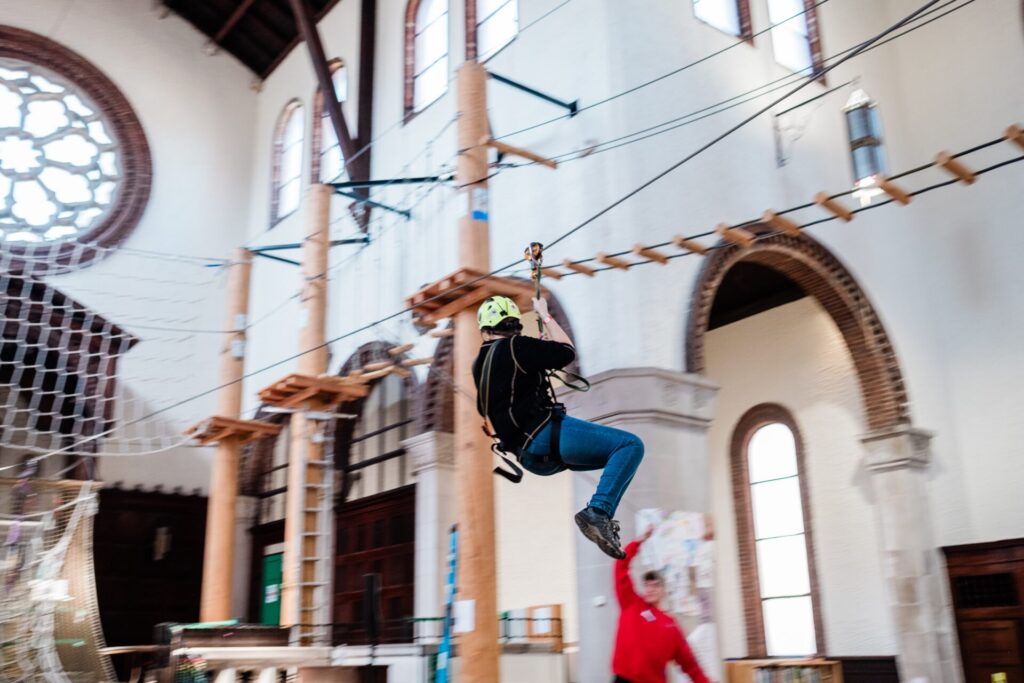
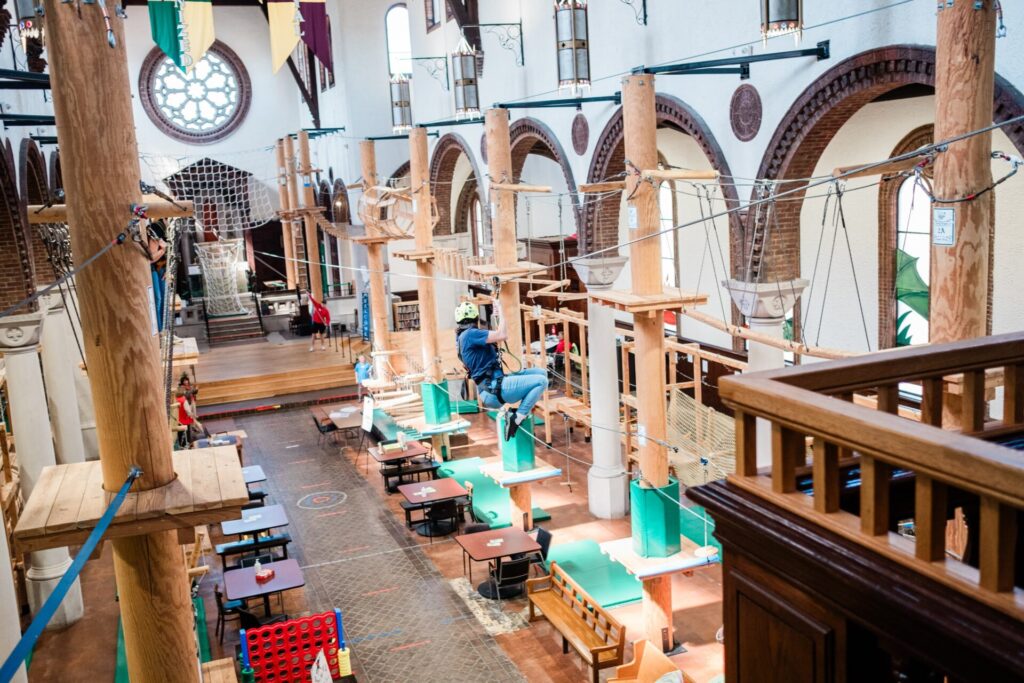
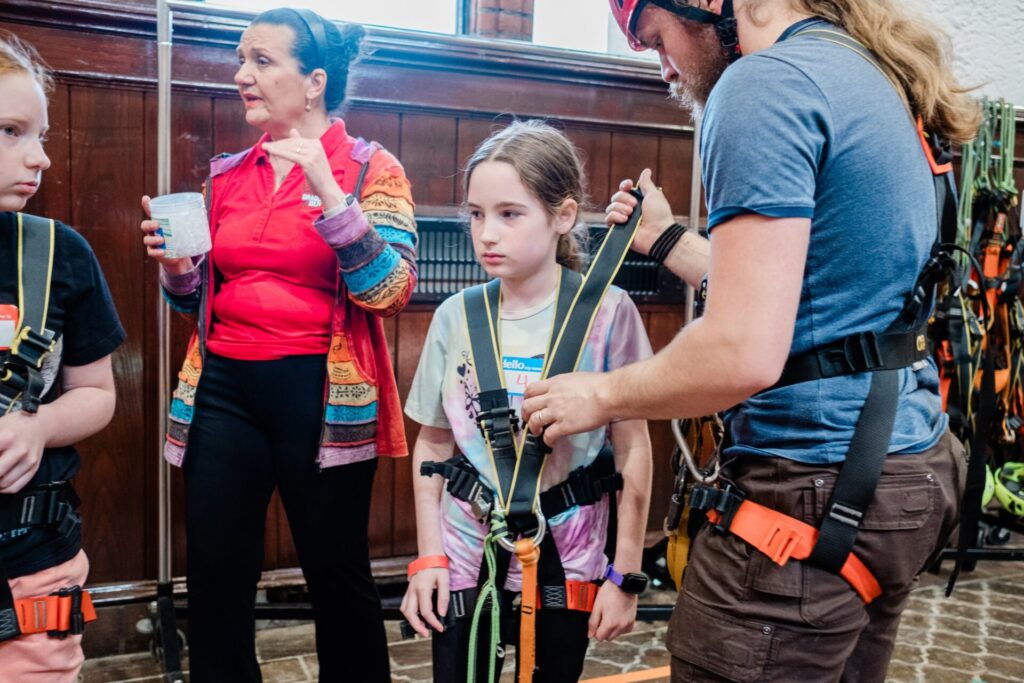
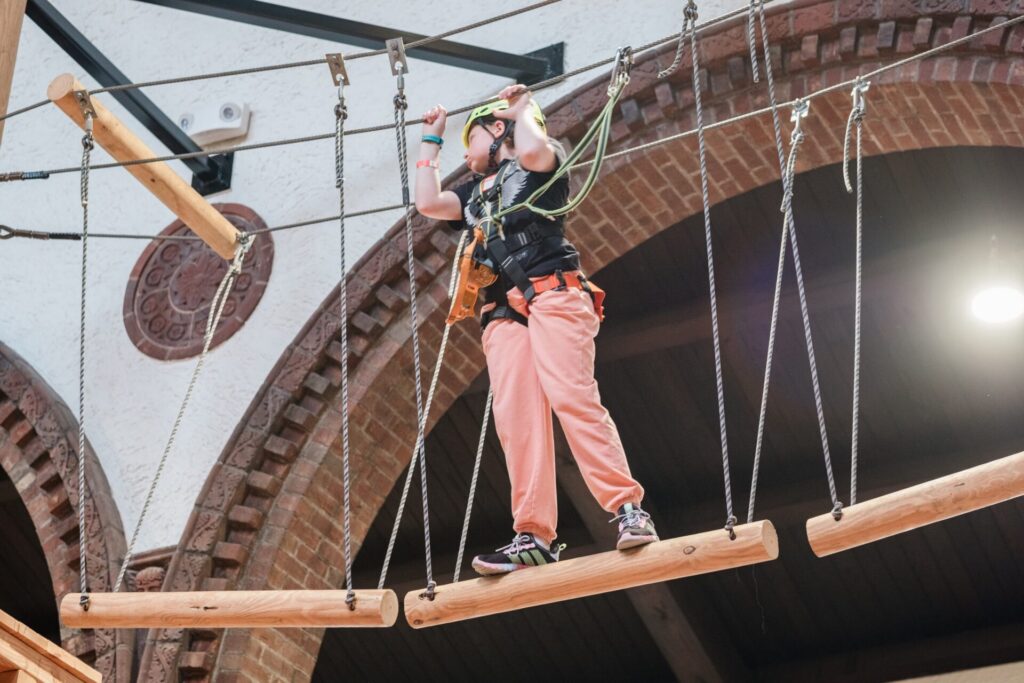
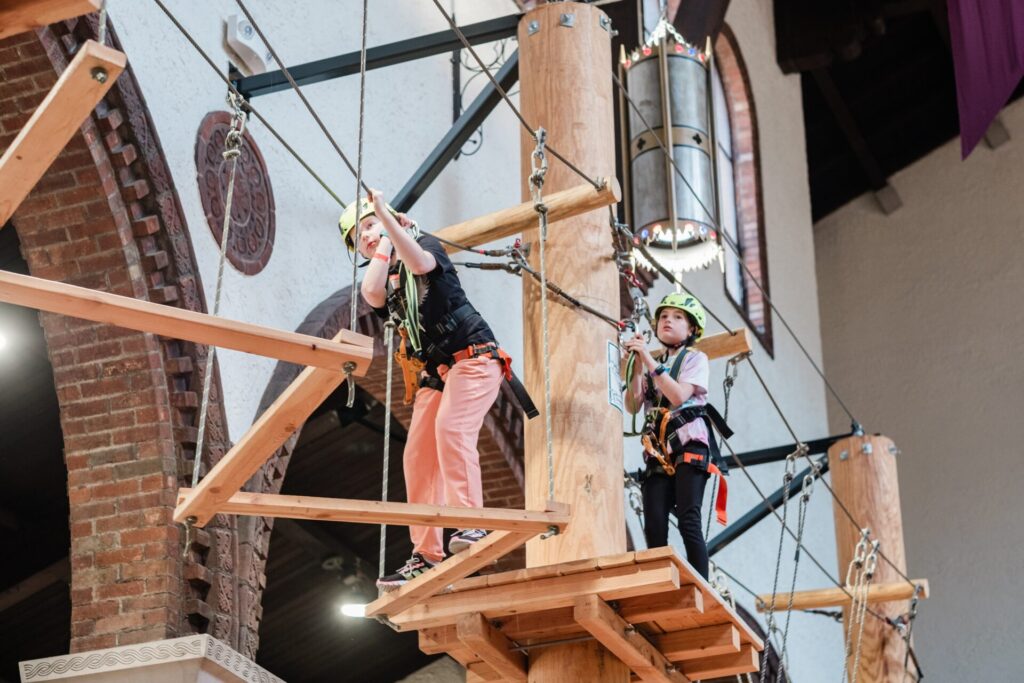
Lozza Petrucci’s mission is to bring learning, community and a sense of belonging to young people. She welcomes kids from age 6 to 13 into the magical space that is Dragon’s Den, where a ropes course lets students climb to the rafters of a beautiful former church in Homestead, PA.
But while Lozza Petrucci and her team have made the most of the remarkable building where they host afterschool and summer programming, they don’t have space to host additional programs for teens.
“I really want to help the kids to succeed,” she says. “So I started thinking, ‘OK, how can I support kids that age out of our program?’ Because when they are teens, their needs increase but the opportunities decrease.”
More affluent teens may have transportation that helps them access to afterschool classes and experiences all around the Pittsburgh area. But many kids in Homestead don’t have these opportunities.
Through this new Moonshot Grant-funded program, teens now arrive at Dragon’s Den after school, have a meal and then board a bus to programming outside their community. Their destination might be a library, a STEM learning center like Citizens Science Lab or a creative hub like Community Forge.
But even before they reach that location, the ride itself has meaning: “While they are on a bus, there is an adult that is trained in mental health and mindful choices. They talk: ‘How is your day?’,” Lozza Petrucci says.
At the destination, they spend time creating and learning, “and then driving back, we debrief. ‘So how was it? What did you learn? What did you like and what didn’t you like?’”
Participating teens also spend one afternoon per week at a local library researching something that interests them. Once they’ve gathered information, they teach younger kids at Dragon’s Den what they’ve learned. “So the younger kids see somebody like them teaching, and they know that when they are older that they can be part of that program,” she says. “My hope is that we can develop an interest in our Black youth to become teachers.”
The program kicked off in late fall 2025 and the Dragon’s Den team is already seeing the impact: One afternoon earlier this year, a teenager appeared in the doorway of Lozza Petrucci’s office. He’s a kid who has struggled connecting with others and engaging as a learner.
But on this day, there was joy in his voice as he described his afternoon learning about glass blowing: “I didn’t know that hot glass looked like honey! And they need to work very, very fast, because it becomes very, very hard,” he explained.
“Do you know the amount of work that it takes to have a sparkle in the eyes of a teenager who normally is just on a cell phone? He was looking at me,” Lozza Petrucci says, “and I could see the sparkle.”
Removing barriers to family-inclusive learning opportunities
Like Dragon’s Den, the team at Brentwood Borough School District has been exploring ways to help kids and families surmount transportation and cost barriers. They also were eager to connect with and better support families.
With funding from a Moonshot Grant, they’ve begun to combine inclusive activities for students, adult learning experiences for parents, and family meals to foster community connection, healthy living and holistic development for both students and parents.
“We wanted our students to be able to access things like soccer programming and dance classes, and things that you might have to go outside of the district for. And then we thought, ‘While those kids are engaged, why not try to engage their families?,’” says Stephanie DeLuca, who served as Coordinator of Curriculum, Instruction and Professional Development at Brentwood Borough, and recently moved to North Allegheny School District.
Free afterschool programming from Soccer Shots began in the spring of 2025, and the full program was rolled out once the 2025-26 school year began. As students enjoyed things like free dance workshops, DeLuca says, “we offered something to share with the parents.”
At one event, folks from the Brentwood Public Library came to talk about their community programming. At another, the school’s food service director spoke about meal planning. Families, including those new to the district, were able to learn what the cafeteria offers and sample the foods, while staff members helped parents fill out forms for the school’s free-and-reduced lunch program.
One important element: At all of the family events, a free dinner was provided. And younger siblings were very much welcome.
Another event included a meet-and-greet with the district’s special education director, who answered questions. For many families, the chance to talk face-to-face with a special ed expert over an informal meal is very different than seeing the administrator’s name on a website and wondering how best to reach out with questions.
On the final day of the program this year, students and their families gathered to enjoy Millie’s Ice Cream and celebrate all the new experiences the kids had enjoyed. Parents were enthusiastic when they responded to a survey about the program, DeLuca says, and it was “just an exciting thing for the kids to celebrate their success.”
Making reading fun through family field trips
Seeds were planted for the Moonshot Grant-funded work happening at Seneca Valley School District when Dr. Marie Palano and her team began discussing Natalie Wexler’s book, “The Knowledge Gap.”
Wexler’s research got them thinking: “There is an achievement gap, but there is also an opportunity gap,” Palano says. “And the opportunity gap, in many cases, exacerbates that achievement gap.”
So they created a program that integrates curriculum-aligned enrichment opportunities beyond the school day, so that kids and their families can visit places like museums, science centers and performing arts theaters. These visits ensure that all of the district’s students develop both the skills and the knowledge necessary to thrive as proficient readers and to see themselves in a variety of contexts.
“There’s so much learning that takes place within a classroom. Our goal was to extend that learning beyond the classroom to the family unit, understanding that the family can then have conversations around their learning as a collective group outside of the school day,” Palano says.
“That’s much different from a student who goes on a field trip and then is bringing their individual learning back to the family unit to share,” she says. “We’re providing this opportunity for the entire family, so that collectively they have the opportunity to reflect and have conversations.”
Students and their families, including any school-age siblings (unfortunately, it’s not possible to transport babies and toddlers safely on school buses, so the littlest ones didn’t attend) were invited to a range of free excursions to places like the Benedum Center.
“A lot of research says students may struggle, and it’s not necessarily an achievement gap, but rather making meaning and having that mental schema for new learning to stick to,” she says. “Many of our children may not have been to the city of Pittsburgh or have had the opportunity to go to the Benedum and see a musical individually, let alone with their collective family.”
Another bonus: Families got to connect with teachers as people, away from a classroom.
“We were looking for educators who typically have a large reach within our school district — which would be our school counselors, our ESL teachers — to accompany these families on these trips to also continue to build that home-to-school connection by way of relationship,” Palano says.
So far, the feedback from families and from teachers has been incredibly positive.
“Our goal was to connect with families, to create a welcoming environment and to extend their learning beyond the classroom. But our teachers simultaneously expressed how wonderful it was to have that time outside of the school day with students and their families and create those connections.”
Meet the storytellers
Melissa Rayworth
Melissa Rayworth is a writer for regional and global news outlets, and a communications consultant who works with people, foundations and companies to tease out and tell their stories across media.
Ben Filio
Ben Filio is a project manager and creative storyteller in Pittsburgh, PA. He has been documenting Remake Learning for more than a decade.