What kinds of programs can give students the tools they need to lead? What kinds of real-world learning experiences will boost student agency in meaningful ways?
Last year, Remake Learning awarded Moonshot Grants to three programs thinking boldly about these questions. In creative ways, each one helps students to deconstruct and make use of aspects of the world around them.
These programs grew from a different inspiration, but all three create space for young voices to grow while offering students mentorship and structure.
“Remake Learning is proud to award Moonshot Grants to these innovative projects that will help students build their confidence, learn practical skills, and develop their leadership abilities in challenging real-world situations,” says Tyler Samstag, executive director at Remake Learning.
TELLING THEIR OWN STORIES
Social media posts, TV episodes, classroom conversations — in these places and many more, immigrant and refugee students hear messages about who they are and who they’re allowed to be.
In Pittsburgh, a group of these young people are exploring and challenging the narratives that swirl around them, thanks to a Moonshot-funded program run by the nonprofit ARYSE.
In collaboration with the University of Pittsburgh, program managers at ARYSE have spent much of the past year helping these students step back and ask: What are these stories telling me about myself and my community? How can I reject what’s untrue and accurately tell the real story of my lived experience?
Like so many Moonshot projects, this one was born from an “aha” moment.
Erica Hughes, program manager of the Girls Art and Maker Group at ARYSE, was working on her Master’s in library science at the University of Pittsburgh when she “saw this real connection between what I was learning about how we get information to the public through public libraries — the duty of a librarian in these spaces — and what we are trying to do at ARYSE in getting information to young people.”
Along with exploring how students can deconstruct and react to stories they’re told, Hughes says, “there is that piece of storytelling: How do the students represent their stories to people in the classroom, to people in their neighborhood? How are these different stories being shared with people and how, sometimes, are they used to maybe promote a certain narrative?”
During summer-camp days and after-school sessions, the students have drilled down into these questions.
At times, they’ve focused on migration: How are the stories of Black American migration similar to the stories of refugees? What is a counter-story about who these people are and the challenges they’ve faced? And what aspects of their story aren’t usually taught in history classes?
Students also looked at education: Is public school really a leveling experience where everyone gets the same resources and opportunities? The ARYSE team made space for critical conversations with students and showed different media that explored this question.
“A lot of them are really honest about their experiences in school, and how it’s not what they might be told it’s supposed to be,” Hughes says.
This is where research skills come in, Hughes says: How can students find the information they need to be critical of these systems?
The ARYSE team has seen young people embrace their growing skills.
Several months ago, one young woman began grappling with the messages city kids often hear about nature — that it’s something entirely separate and inaccessible, hidden away from their daily lives. With a growing capacity to deconstruct narratives and document conflicting perspectives, she created a photo exhibit called “Hidden in Plain Sight.”
“She went around and took photos of little plants poking up through concrete or out of an alleyway,” Hughes says. “That moment where she was standing in front of all of us staff and talking about what this means to her — what she was inspired to do — was just such a revelation.”
GRAPPLING WITH GAME DESIGN
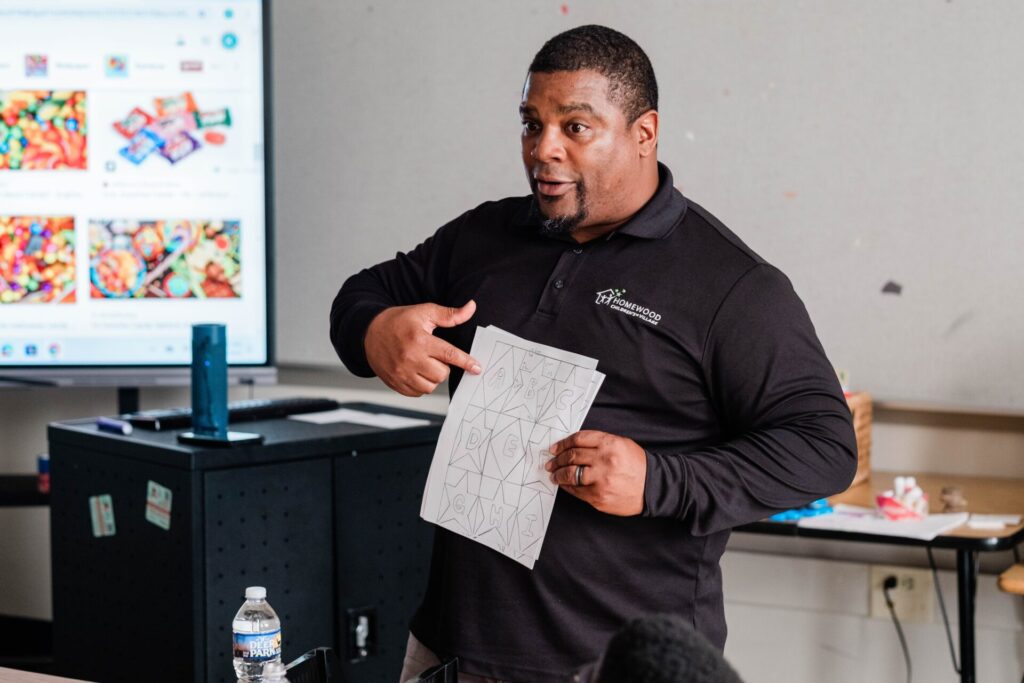
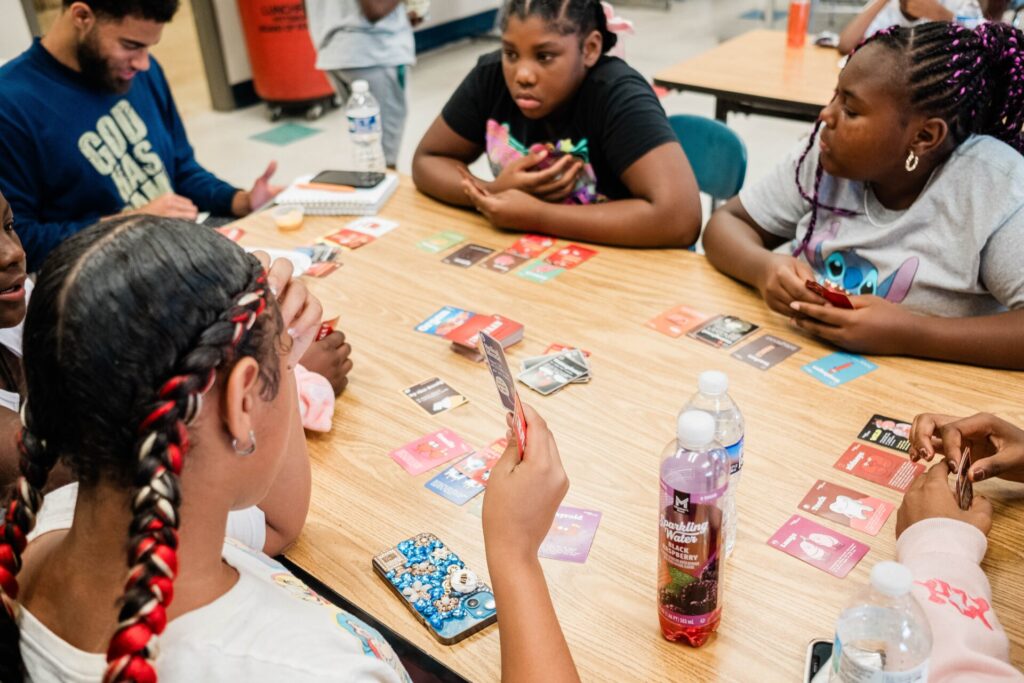
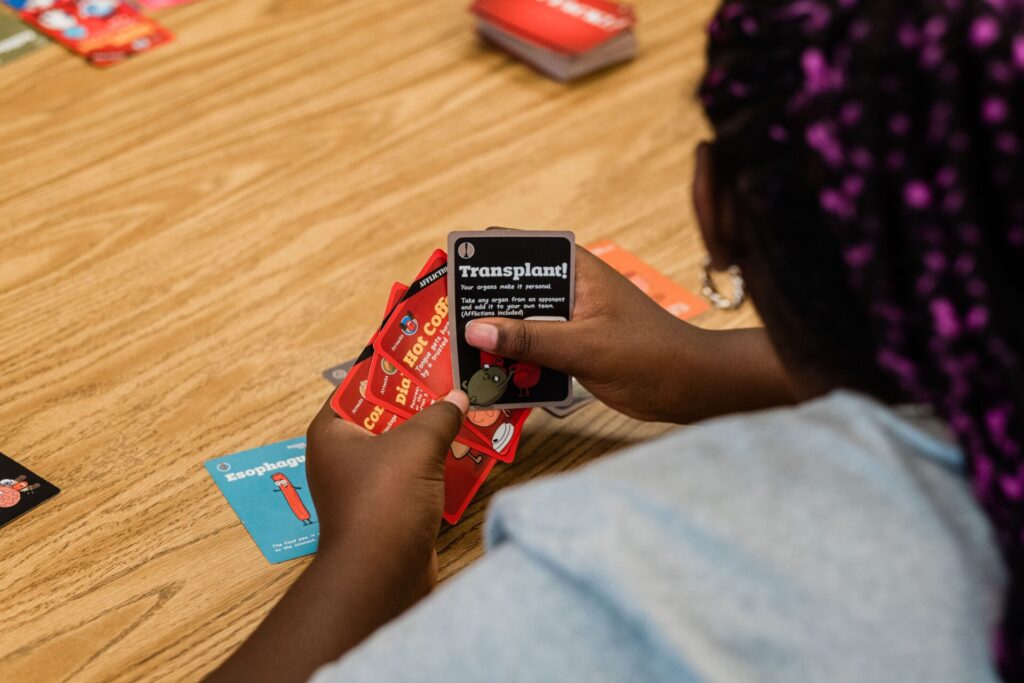
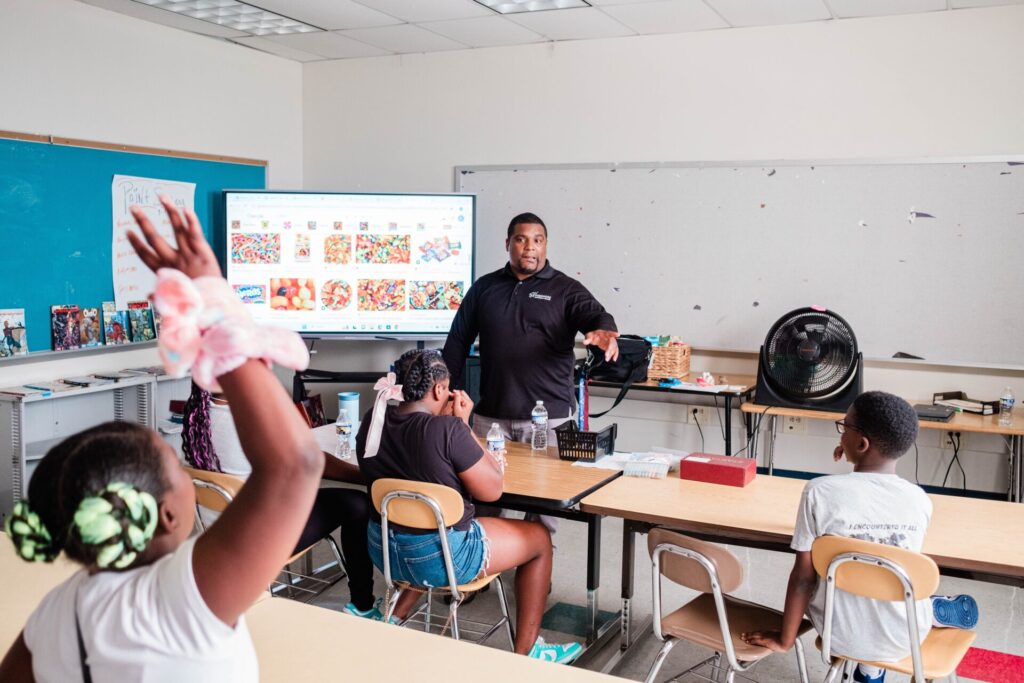
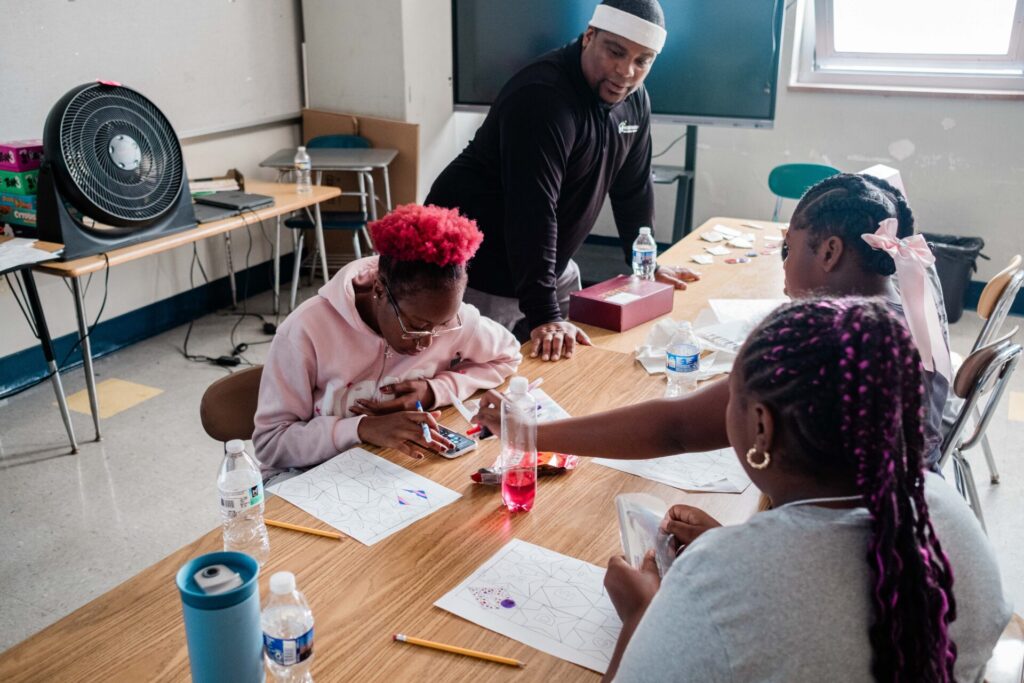
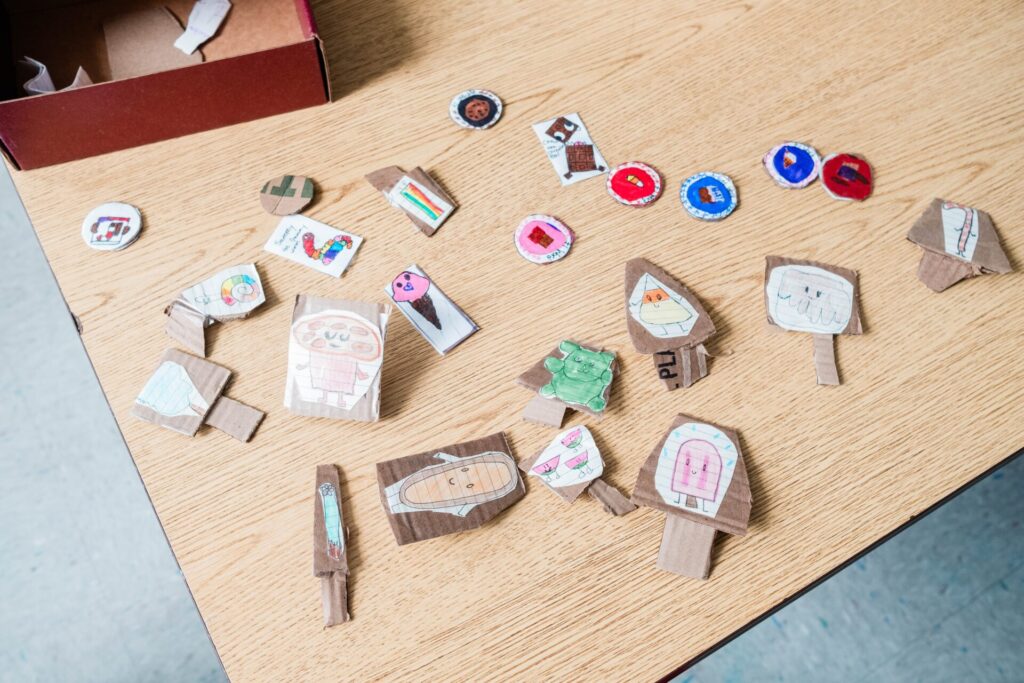
With help from a previous Moonshot Grant, the Village Games+ program at Homewood Children’s Village has been helping kids design and build their own educational board games since 2024.
In the first phase, a group of elementary schoolers were mentored by high schoolers to explore what makes a game work well and what kinds of game-playing could effectively teach literacy skills.
In collaboration with Carnegie Mellon University’s Entertainment Technology Center and the University of Pittsburgh’s Digital Narrative and Interactive Design program, this led to three prototype board games that were originally sketched by hand, with playing pieces drawn on paper.
During their latest Moonshot Grant, the focus has remained on analog gaming and bringing students’ own ideas to life. But these young people have begun leveraging digital technology to bring their ideas more fully to fruition.
Using a laser cutter and 3D printer, the students (which now include middle-schoolers) have fabricated professional-looking game boards, playing pieces and cards. And though hand-drawn characters are sometimes printed directly onto game pieces, the students have also begun exploring the possibilities — and pitfalls — of using AI to bring their creations to life.
Throughout last summer and during afterschool sessions this school year, students used AI to build on their ideas for game characters and playing piece designs.
In the process, they are learning to use technology that will likely shape their future careers, says the program’s director Benjamin Walker. They are also discovering the limitations and baked-in biases of today’s AI tools.
Sometimes, a student would share an idea with AI and ask for suggestions, “but they felt like ‘what I came up with was better,” Walker says. “What they’ve learned is that it takes time to learn the best way to prompt and you have to learn a particular generative AI software well enough to see what will get it there.”
Also, he says: “They learned that sometimes the data set for what you’re trying to do is so limited that that particular generative AI may not be the system for you – specifically with Black culture and Black imagery.”
Just one example: Students found that “the word ‘grandma’ triggers a European aesthetic of a grandma, unless you say ‘an ethnic, diverse grandma,’” Walker says. That sparked meaningful discussions about AI among the students.
Walker and his team have seen students at all grade levels grow during this program. He points out that while some students may pursue careers in game design or other STEM fields, the entire group is becoming skilled at using a range of technologies and thinking critically about the roles these technologies can play.
Along with understanding game design, they are becoming problem-solvers who embrace each other’s outside-of-the-box ideas and experiments.
“We’re seeing these ‘aha’ moments and participants really get into playing, thinking through and creating,” he says. “They have ideas like, ‘What if we did this? What if we did that?’ and thinking through how that will work, and then trying it out, and then realizing, ‘Ok, not quite. But if we took it this way, then it works.’”
The adults on the team have also learned new ways of collaborating and iterating.
Now, Walker says, when a student comes up with an unorthodox inspiration for a new game, “I’m like, ‘You want to bring that game in as an inspiration for this? OK, so how would you do that?’ Instead of saying, ‘Nah, that ain’t going to work,’ we can be like, ‘Yeah, and…?’ So seeing that and using that principle of ‘yes, and…’ is really just enlightening.”
LEADING THE WAY TOGETHER
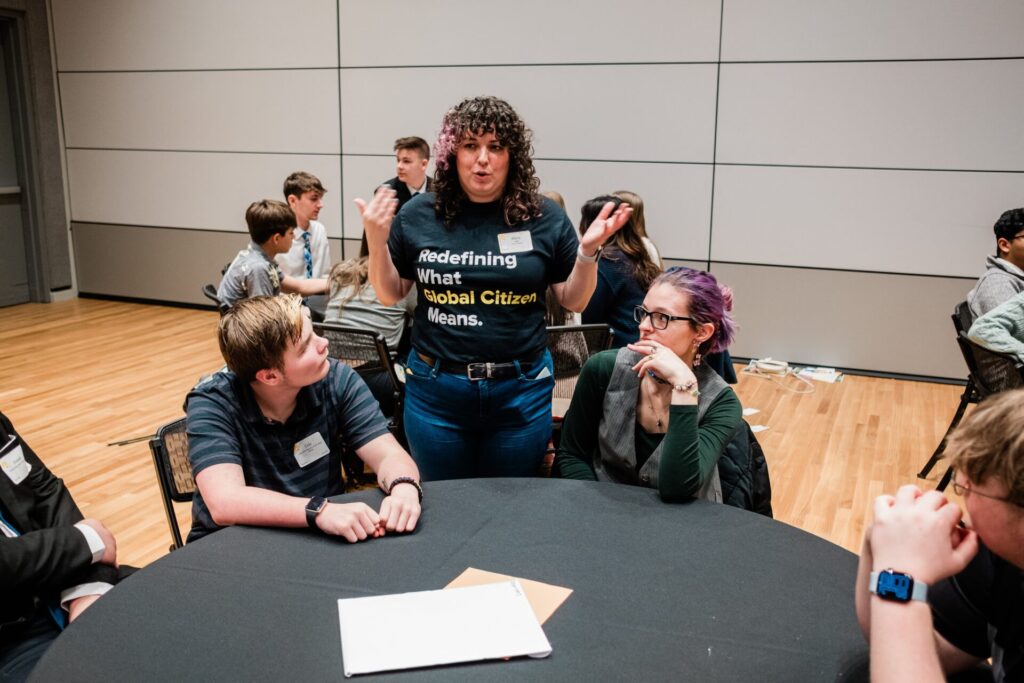
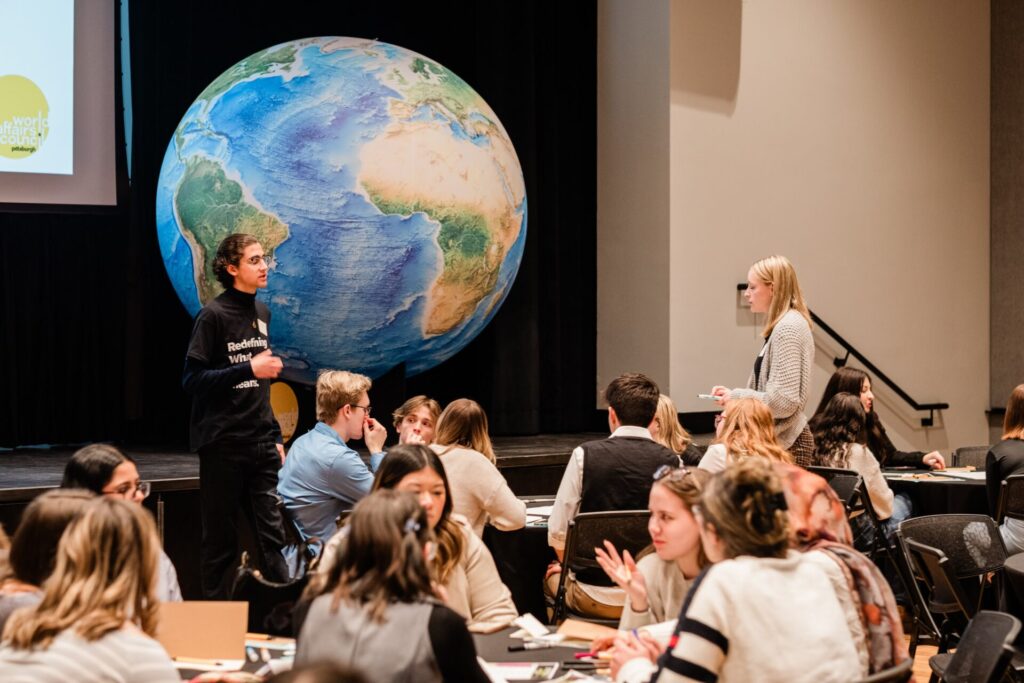
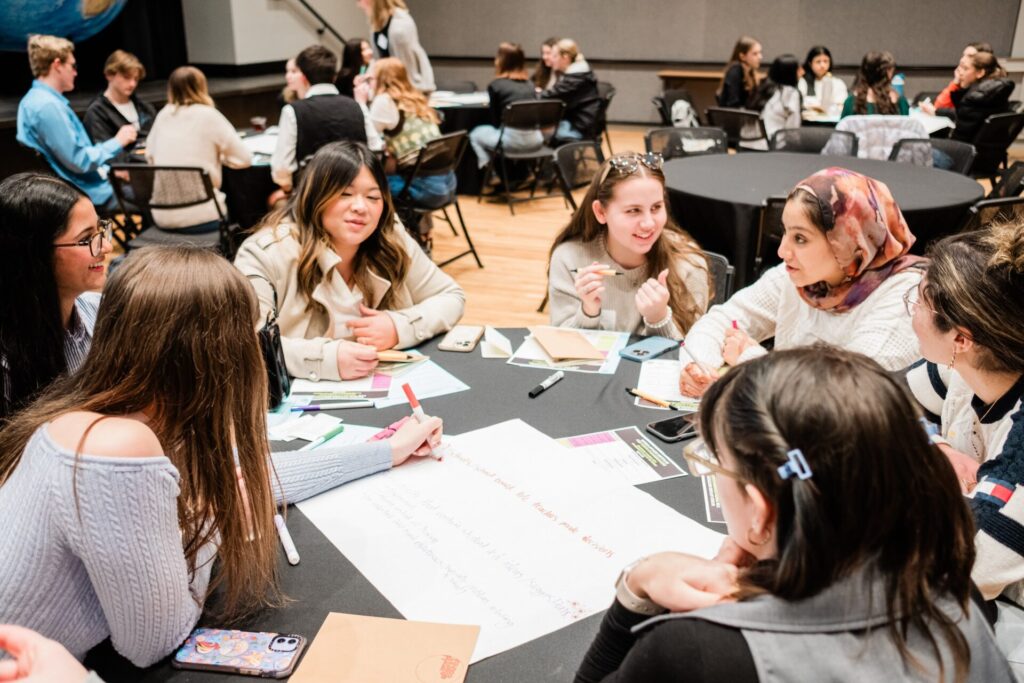
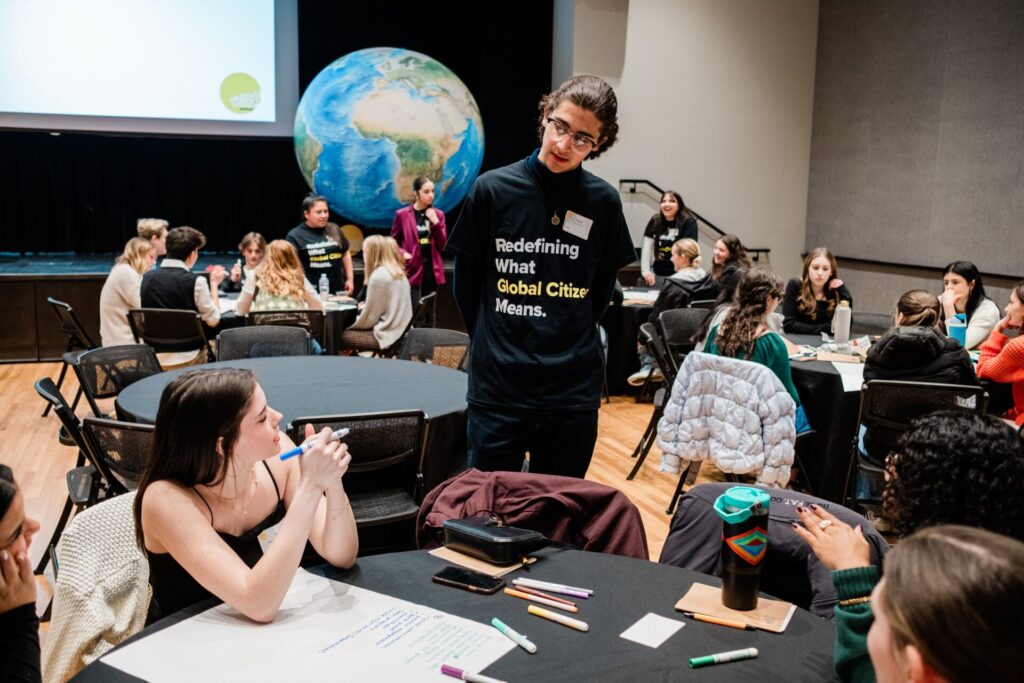
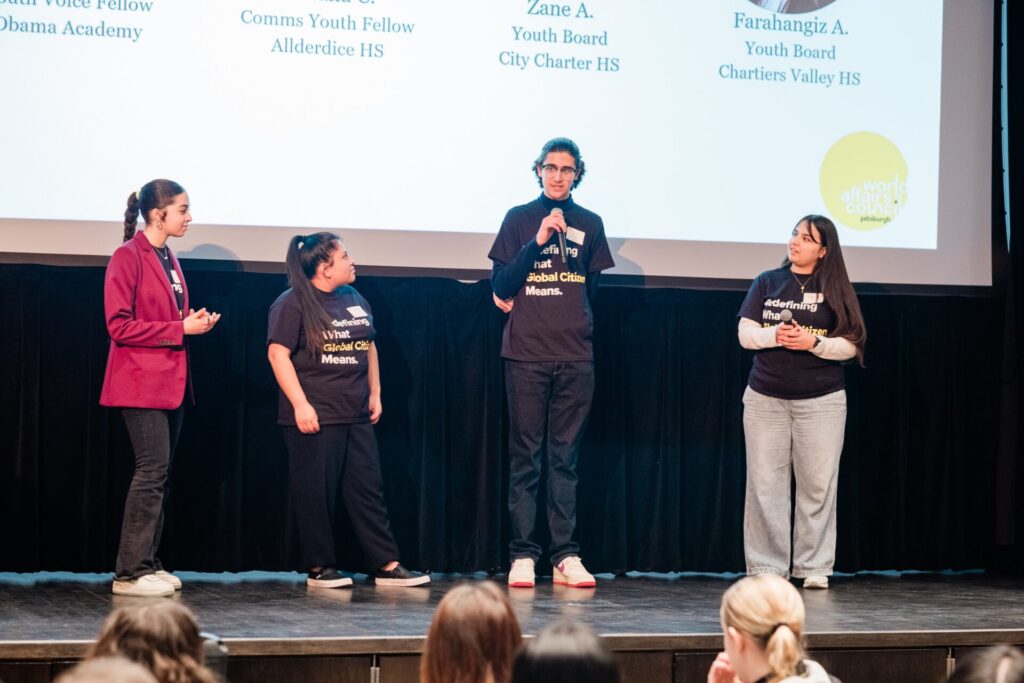
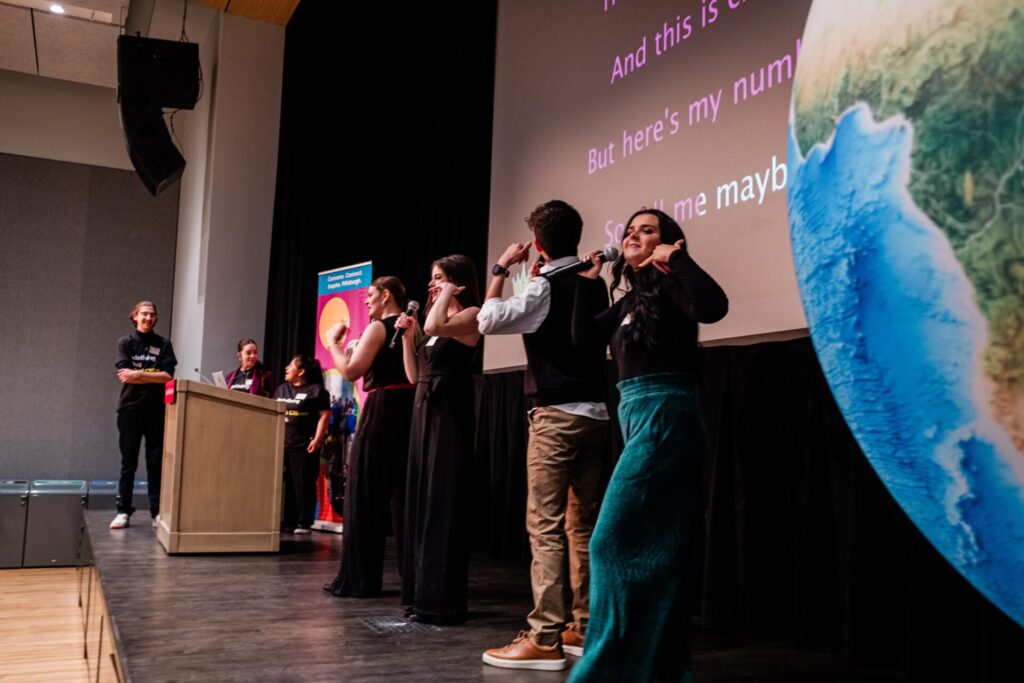
Like Homewood Children’s Village, the World Affairs Council of Pittsburgh is on its second round of Moonshot funding. Their project also uses game design to help students explore larger questions and teach others what they know.
The goal, though, is hitting the reset button on youth-adult power dynamics by empowering young people to work with organizations seeking to reshape how adults and youth collaborate.
The first phase involved high schoolers designing “a training about how to authentically include youth in decision-making spaces,” says Kathleen Newell, education program manager at the World Affairs Council.
More recently, that training has come to include student-made simulation games.
Here’s the key, Newell says: The games “look at how we participate in systems and how we are taught to make decisions in different systems, based on what we know or what we value.”
This approach “really helps to remove any personalization or critique of anyone’s work,” she says, because participants aren’t having their own current systems examined.
The student-created game opens the door to thinking and talking about systems. “That really helps folks to then connect to their own context and work, as the discussion and the workshop continues,” Newell says.
The teens have been busy “working to iterate on that game and continue to refine it, but also to think about how we can be using game design and creating new games that allow these same conversations to be fostered.”
This happens through a mix of in-person and virtual gatherings, to accommodate teens from around the Pittsburgh region. Students have also been connecting with peers and educators across the state of Pennsylvania and nationally, along with speaking at conferences including SXSW EDU.
These teens are also getting a range of professional development to help them navigate adult spaces.
“Young people have so much to offer, just based on the skills and leadership and their lived experiences coming into these spaces,” Newell says. “But we also know that coming into different rooms with adult audiences, there are skills that aren’t often taught in school.”
Among the most eye-opening moments: City Theater hosted a workshop on storytelling and dialogue facilitation where students learned to remove themselves from a discussion and just facilitate understanding.
Students experienced the difference between presenting their knowledge of a subject versus facilitating a dialogue about it.
“They were like, ‘We never get graded on this at school. We’re always graded on what we know and how we can make our case,’” Newell says. “It was almost an uncomfortable process for them.”
Too often, “we’re not teaching our students how to be in a conversation that’s just fostering understanding,” she says. “How do we keep building dialogue facilitation skills — these skills about building understanding and learning how to reposition ourselves in these conversations?”
As these students share their new skills, they’re seeing the impact their work can have. While hosting a peer-to-peer training at Camp Global Minds last summer, the teens inspired a school group from Alabama to bring this work to their school.
Because of the Moonshot Grant, “we’ve been able to give each of our Global Minds chapters physical game boards to use to start these conversations within their own context,” Newell says. So the Alabama teens headed home with their game board, and with help from a teacher they approached their school’s administration about hosting a workshop.
As this school year was beginning, teacher orientation in their community included intentional discussions about youth-adult partnership.
“It’s just really cool to see the multiplying effect of this work, and that students and adults can really carry this forward,” Newell says. “The sustainability piece is really exciting.”
Connecting and communicating. Reaching out to achieve authentic understanding. Iterating in search of better outcomes. These methods and goals are threaded through all three of these Moonshot-funded projects.
Newell appreciates that these ideas are also embedded in the Moonshot experience itself. The Moonshot team encourages bold efforts and learning from failure in pursuit of a preferred future.
Members of the cohort get inspired by one another, and eye-opening failures are celebrated along with successes. When things don’t go according to plan, “we’re all learning from that and doing something different moving forward,” she says. “It has been such a rare opportunity to have funding that allows us to do that.”
Meet the Storytellers
Melissa Rayworth
Melissa Rayworth is a writer for regional and global news outlets, and a communications consultant who works with people, foundations and companies to tease out and tell their stories across media.

Photography: Ben Filio
Ben Filio is a project manager and creative storyteller in Pittsburgh, PA. He has been documenting Remake Learning for more than a decade.