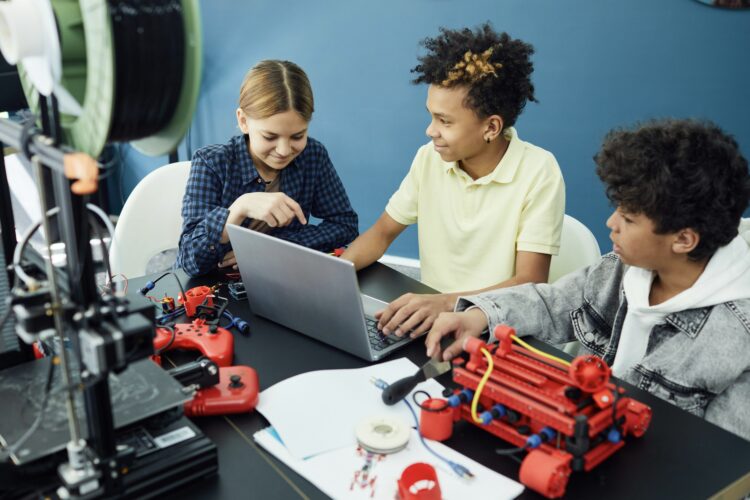
Last year, researchers from the nonprofit Education Reimagined invited folks around the country to think back to their childhoods: Try to remember a person who was genuinely interested in helping you learn and grow, they said: “Tell us about someone who encouraged you and perhaps even helped you take the first, fledgling steps toward your future.”
Who was it?
Sometimes, the answer was a beloved classroom teacher. Just as often, it was a coach, a librarian or a camp counselor, or perhaps an artist who worked at an afterschool program or a retired neighbor eager to share stories from their life.
Ideally, every child has moments of learning that extend well beyond their classroom, even as their school and their teachers play a central, inspiring role in their development.
Learning really is possible everywhere: All communities have some mix of fertile ingredients — K-12 schools, science museums and cultural institutions, parks and playgrounds, colleges and universities, local businesses where kids can work and find inspiration, afterschool programs of all kinds, and even friends and family eager to share their knowledge.
The challenge is this: In most places, these everyday learning resources remain wholly disconnected.
In many communities, there is no mechanism to guide students toward experiences that can build their skills and light the way toward potential career paths. And there is no way to accurately assess and credential the learning that’s quietly happening across all of these contexts.
So how can a community or a region develop a true learning ecosystem, where all educators — even those who are new to that title — can partner to help students, while also helping the whole community flourish?
Creative answers have been emerging in recent months from the work of four projects, each catalyzed by a Remake Learning Moonshot Grant to help make their goals a reality.
As they each explore how learning ecosystems begin and grow, their work sheds light on key ways to fuel the authentic cross-sector collaboration that can change students’ lives. In the process, they are creating new opportunities for learners, while opening up new roles and career pathways for a wide range of educators.
Central PA Learning Innovation Cluster
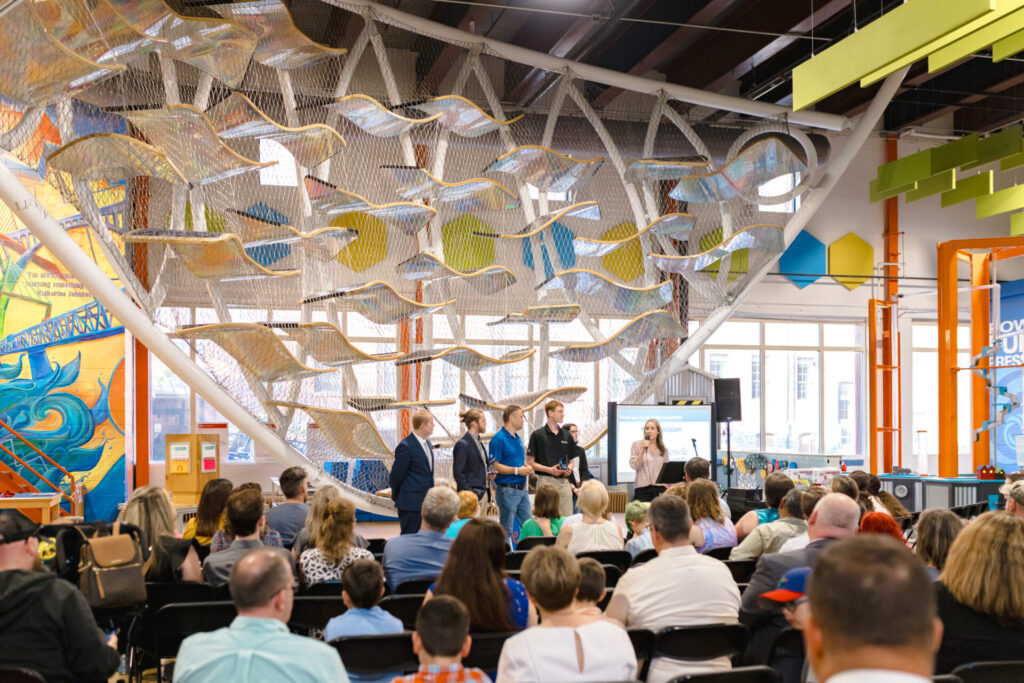
How Ephrata Area School District is forming a learning innovation cluster in the Lancaster and York region of Pennsylvania.
Dr. Brian Troop is disarmingly frank when he speaks about the inspiration for his community’s learning ecosystem.
On past visits to Pittsburgh, Troop saw the Remake Learning network in action. He watched all kinds of educators meet face-to-face to brainstorm, collaborate, turn tiny grants into powerful projects and, more than anything, become friends who encourage each other.
“I sort of was, honestly, jealous of the opportunity for support and for collegiality that they had in that network,” says Troop, who serves as superintendent of Ephrata Area School District in Lancaster County.
So he began talking with Dr. Joe Mancuso, superintendent at nearby Eastern York School District, and Lauren Miller, who runs the Lancaster County STEM Alliance.
Their relationships were an early ingredient in the creation of the Southern Pennsylvania Innovation Network (SPIN). Through small and large gatherings, they’ve begun helping their local education community “to be together, so that we can start building relationships and trust,” Troop says. “Out of trust comes more sharing and more transparency, and more collaboration opportunities.”
Superintendents from Southeastern Pennsylvania have gathered locally for SPIN events and traveled together to visit districts outside their region. Teachers from multiple districts in the area have also met for professional development.
The connecting thread to all of this? The chance to form face-to-face relationships — no easy task these days. An early event offered a stark illustration of that: Though Troop’s district and Mancuso’s are barely a half-hour drive apart, many staff members met for the first time at a “job alike” event last year.
Learning Any Time, Anywhere
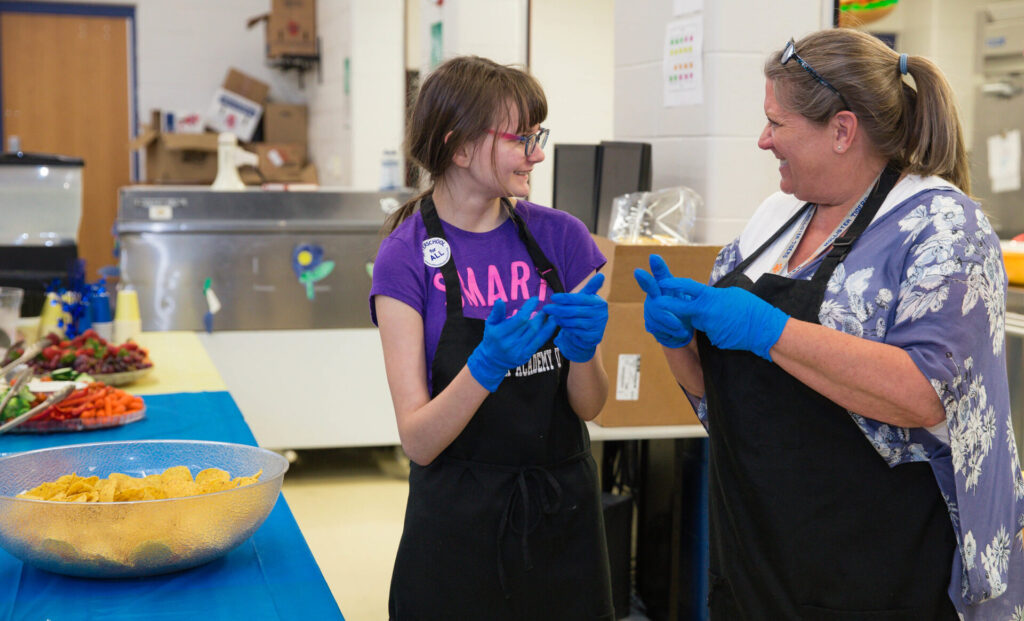
How the Afterschool Alliance is developing multiple pathways for students to earn credits through service learning and career exploration.
That same goal of authentically connecting is at the heart of work unfolding in Nebraska, where the national Afterschool Alliance has been partnering with Beyond School Bells, a program of the Nebraska Children and Families Foundation.
The Afterschool Alliance’s vice president of innovation and outreach, Alexis Steines Rao, and Nebraska Children and Families Foundation’s vice president of education, Dr. Joe DiCostanzo, have been working closely with school districts and Nebraska’s Department of Education to ensure that afterschool programs can connect classroom learning with real-world experiences.
Imagine a near-peer mentoring program where high school students are trained to teach STEM-related activities to elementary schoolers at afterschool programs. The afterschool programs are enriched, younger kids are excited to do hands-on learning with teens, and the teens get real-world teaching experience that could lead to education careers.
As a bonus, DiCostanzo says, people remember about 90% of what they teach others, while only remembering about 10% of what they’re told. So these high schoolers are getting their own deeper learning by teaching STEM concepts, while potentially discovering STEM-related careers in the process.
At the same time, the folks at Beyond School Bells are partnering with Southeast Community College and the local business community to give high schoolers jobs that will simultaneously earn them high school credit, college credit and a stipend.
“We know that kids receiving dual enrollment credit are much more likely to go to college,” DiCostanzo says, and teens who need to earn an income still need the experience of internships and job-shadowing. What if those teens were connected with real part-time jobs that dovetailed with their school coursework while also genuinely benefiting local businesses?
Though this plan is in an early stage, Moonshot Grant funding is helping DiCostanzo, Steines Rao and their colleagues coordinate applications for public funding to make it a reality.
But before either of these initiatives could be planned, communication and connection had to come first.
“All of this is built around an identified shared purpose,” DiCostanzo says, and that common ground can only be reached by forging relationships.
Once people have met in person, they’re more likely to reach out to one another to continue a conversation, which can lead to further understanding and eventually collaboration. By making networking a shared group commitment, people aren’t hampered by the worry that they’re bothering someone if they call or send an email.
UNBOUND Learning
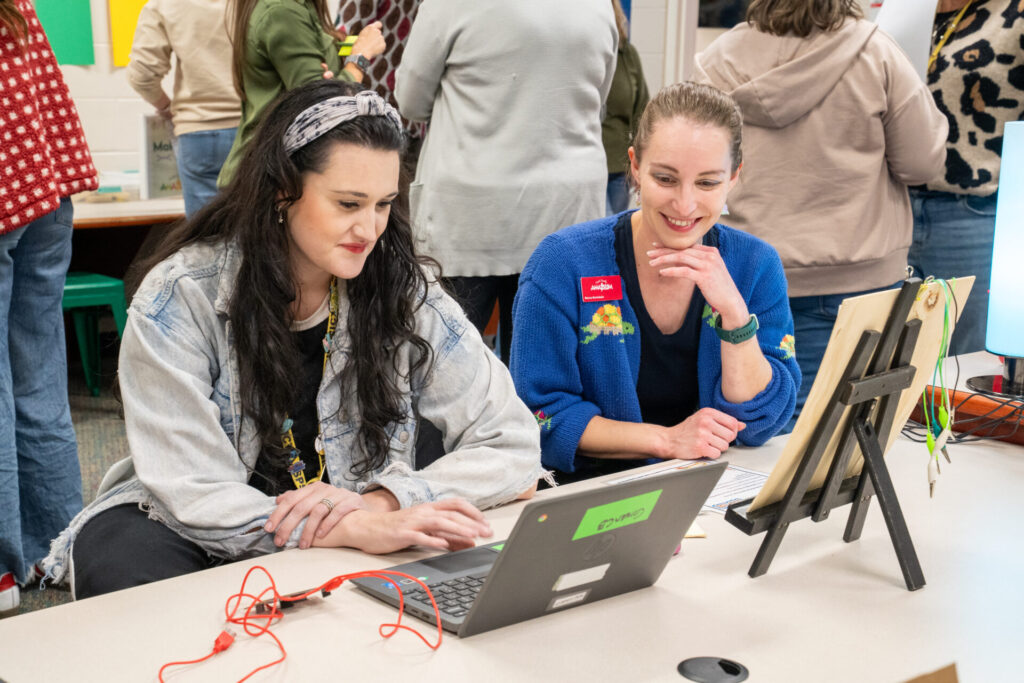
How the Scott Family Amazeum is laying the foundations for a learning ecosystem in Northwest Arkansas.
Just like the folks in Nebraska and Southeastern Pennsylvania, a team at the Scott Family Amazeum, led by CEO Sam Dean and Professional Learning Initiatives Manager Sarah Wiley, has been collaborating with others to build their own ecosystem — the Northwest Arkansas Learning Network.
The Amazeum celebrates its 10th birthday this year, and they’re not the only Northwest Arkansas learning hub to emerge in recent years. Throughout the heart of the Ozarks, “all these institutions are popping up, all this growth, all this movement is happening,” Dean says.
“With all of these players that are now surfacing, as we’re growing and everyone is running 100 miles an hour in their track,” he says, the network can “bring them together under an umbrella to be able to think about centering around the lives of families.”
So far, they have hosted a series of formal and informal gatherings — a steady cadence of small opportunities to meet. As longtime acquaintances and new friends all begin to get to know one another, the goal is to keep “that consistent connection — that touchpoint — with them,” Wiley says.
The team is also exploring what they can mine from Remake Learning’s 15-year history, including the ideas shared in the Pittsburgh Principles, so they can benefit from others’ experience while constructing a vision that’s unique to their region.
Among the most valuable lessons they’ve been learning: Launching a thriving ecosystem requires a big, ambitious vision articulated by leaders who are passionate about welcoming the entire community into the work of uplifting kids. But plenty of patience and a willingness to learn, to iterate and to sometimes fail forward, are vital, too.
You can’t rush things, Dean says: “It happens in a series of steps. It doesn’t happen in grand leaps. That’s where things often fall down, in that middle, and that’s what the team has worked so hard on: making sure there are steps that allow progression to happen.”
Expanding the Team
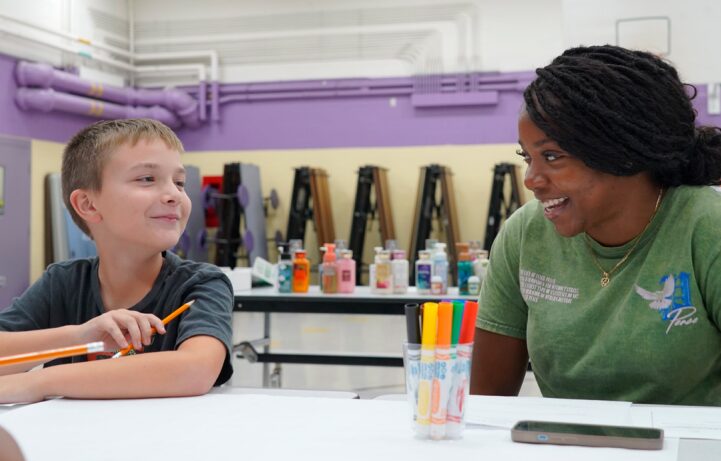
How Education Reimagined is identifying the core competencies of learning ecosystem educators.
The folks at Education Reimagined have been eagerly watching the Moonshot-funded work happening in Arkansas, Nebraska, Pennsylvania and on Long Island, while also doing their own.
Chief Innovation Officer Emily Liebtag and Senior Partner for Ecosystem Growth and Advancement Bobbi Macdonald have seen firsthand how effectively learning ecosystems can address “one of the most urgent and enduring needs in education: ensuring that every young person is known, supported, and connected to the opportunities they need to thrive — not by chance, but by design.”
Those words appear in the research report that grew from Education Reimagined’s Moonshot work, which explores the competencies that educators need in an effective learning ecosystem and can help educators in places like Arkansas and Southeastern Pennsylvania as they craft their new networks.
Liebtag and Macdonald have also been collaborating directly with emerging ecosystems around the country to learn from them.
Among their partners in this work: Runway Green, a public-private experiential learning campus under construction in Brooklyn. The complex, affiliated with an Outward Bound middle school in another part of Brooklyn, will include a high school, plus farms, labs, workforce training facilities and more.
Together on seven sprawling acres of waterfront land, this community of traditional and nontraditional educators will introduce thousands of New York City public school students to green economy careers.
What will students need most from these educators and from the people working in emerging ecosystems throughout the U.S.?
As their report explains, Education Reimagined found commonalities among effective educators in all contexts, including the ability to build and sustain trusting relationships with students. But right now in many communities, building that trust isn’t easy, Macdonald says, because “usually the systems around educators aren’t designed necessarily to really help make that happen.”
That’s a key challenge that emerging ecosystems can work to solve.
Also, their research found that effective ecosystem educators guide learning without controlling it. They help learners to ask questions, make choices and navigate challenges. Adults step in to support, but not to steer every move.
Guiding without controlling helps teach the problem-solving skills and executive function that we know students need. But it’s very different from what schools have traditionally done.
It “requires humility and openness, a willingness to acknowledge what you do not know, to learn alongside students, and to trust that the process, while sometimes messy, will lead to growth,” the Education Reimagined report explains.
“Caring is not peripheral here, but the foundation of authentic learning. It also means allowing space for learners to experience failure, reflect, and try again,” the report says, “knowing these moments often lead to the deepest learning.”
We know that today’s students need deep learning and true skill-building, and we know they need an entire community of caring adults — within and beyond school walls — collaborating to help them grow.
Those people are out there in every community, Liebtag says, including “grandmothers and community based organizations like YMCAs, afterschool programs, family programs, you name it… who are “core to who educators are.”
The knowledge and opportunity found in the wider community can support and augment the crucial work of classroom teachers and school leaders. Through thoughtful collaboration and a shared commitment to kids, learning ecosystems can prepare today’s students for the real and swiftly evolving tomorrow that awaits them.“We can imagine and do as much to bring real life into the classroom as we can,” Southeastern Pennsylvania’s Troop says. “But we would be so much more effective at that if every organization within our community saw themselves as valued partners in the educational process.”
Meet the Storyteller

Melissa Rayworth
Melissa Rayworth is a writer for regional and global news outlets, and a communications consultant who works with people, foundations and companies to tease out and tell their stories across media.