
On a recent Friday afternoon at Pittsburgh’s Bakery Square, South Fayette School District superintendent Dr. Michelle Miller was busy taking notes during a breakout session at the AI Horizons Summit.
Miller was among nearly two dozen superintendents from the Pittsburgh region who attended the two-day AI Horizons gathering to explore the potential and the pitfalls of artificial intelligence’s growing role in students’ lives.
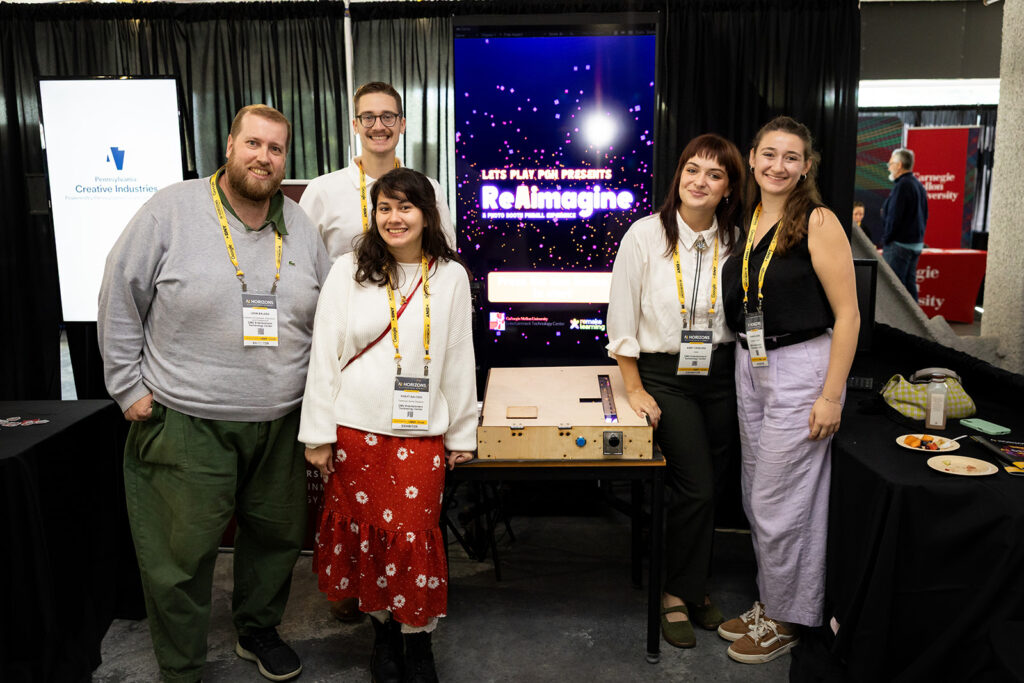
At a breakout session called “Deploying Imagination: Creativity in the Age of Intelligent Tools,” Miller listened as Remake Learning Council Member Derek Ham, director of the Entertainment Technology Center at CMU, spoke with Jake Marsico, chief creative officer at Deeplocal.
Though it may have seemed like a simple quip to many in the audience, Miller was struck by Ham’s comment: “You can’t spell entertainment without AI,” he said.
A moment later, Marisco followed up with this: ‘I think we’ve always had this tendency to kind of like separate technology and creativity. But I think you’d be pretty hard pressed to find a creative direction or pursuit that isn’t aided by technology.”
After all, Marisco said, “the pencil was, at one point, a piece of technology.”
That was one of many lightbulb moments for Miller and the other superintendents who attended the summit.
“So often we think of AI and we put it in this bucket of ‘it only belongs in STEM and tech,’” Miller says. “But how is AI supporting our other learners? … One gentleman called their learners ‘creatives,’ and I loved that. How are we preparing creatives for their future? Because AI is going to be part of that.”
Additional themes and ideas that surfaced during AI Horizons included these:
THINKING BEYOND SCHOOL SETTINGS
Rather than being a conference designed strictly for educators, the summit brought together a wide range of speakers and visitors — tech experts, energy executives, scientists, business people, elected leaders and more — who took a collective deep-dive into the many ways that artificial intelligence is increasingly used.
Those non-education perspectives were valuable to the superintendents who attended.
Just one example: Fox Chapel Area superintendent Dr. Mary Catherine Reljac attended a session that explored the use of AI-enabled automatic translation in military settings.
“I thought immediately how that could help our students who are learning English,” she says. With this technology, “that language barrier is easier to overcome while they are learning their new language and adapting in a new environment.”
UNDERSTANDING THE SCOPE OF CHANGE
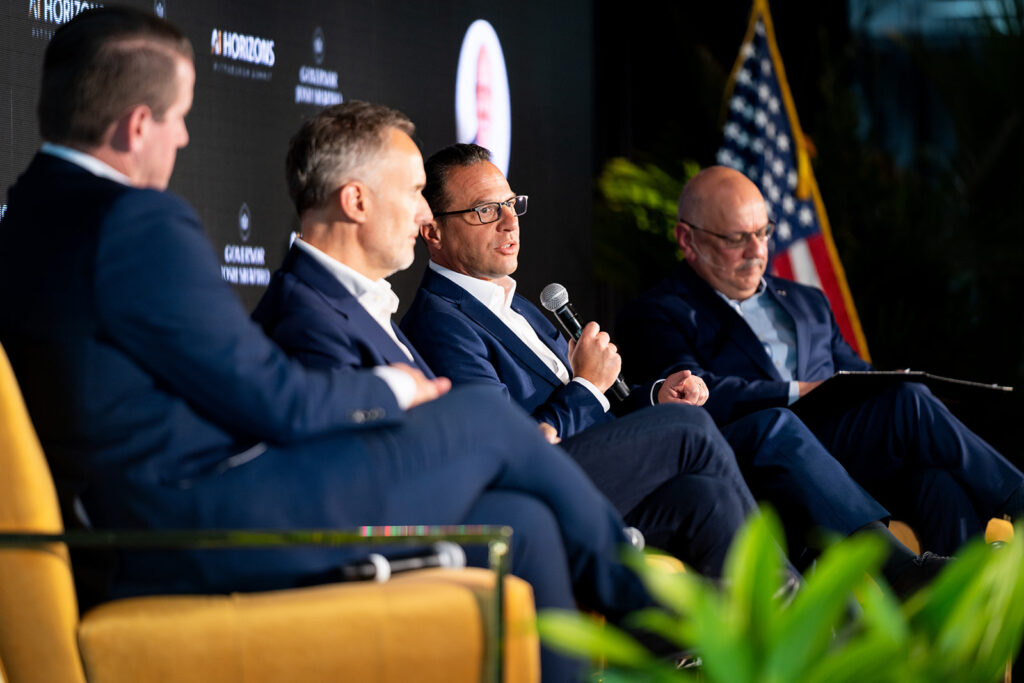
Day one of AI Horizons featured “the headliners, including the governor, and lots of impassioned speeches,” says Butler Area superintendent Dr. Brian White. The second day drilled down into more actionable insight, “because the people actually doing the work were the ones speaking.”
Among the sessions White found most eye-opening:
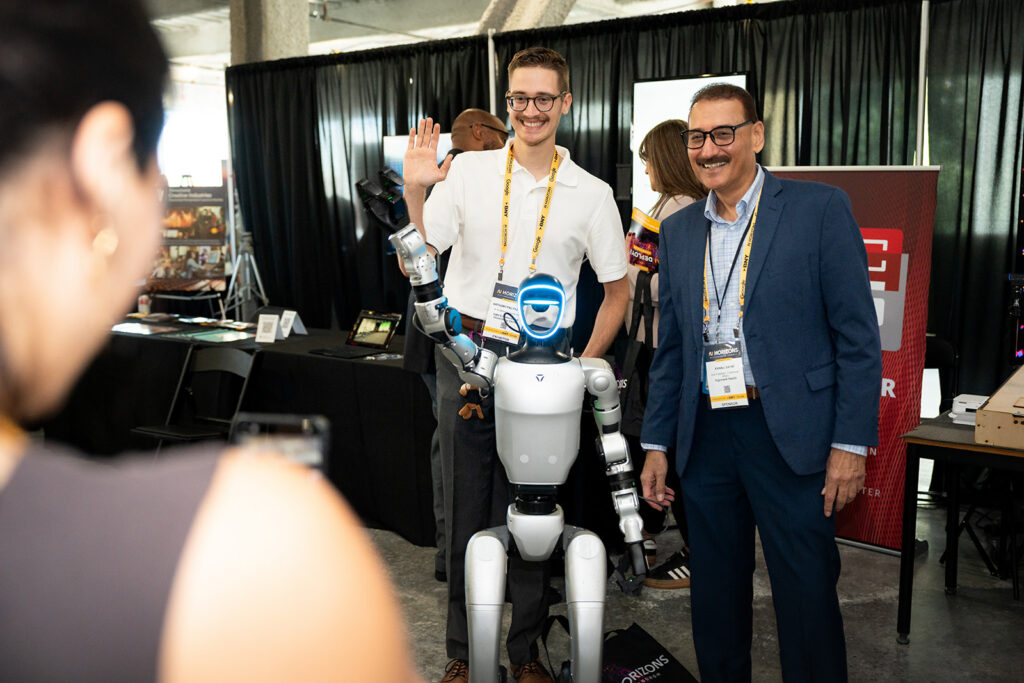
During a conversation called “AI’S Future is Physical,” SkildAI co-founders Abhinav Gupta and Deepak Pathak shared what White described as “an awesome and terrifying video about how they’re building one robotic brain that lives in a data farm and is learning from all the robots that are deployed within its brain across the globe, all doing different kinds of work.”
The panelists shared that within less than a decade (and perhaps, some believe, in as few as three years) many people in the developed world will interact with robotic help on a daily basis. Robots powered by massive robotic brains will do household tasks like folding clothes and professional tasks like assisting nursing home residents with standing and walking.
This shift in daily life will be similar, they said, to the way life changed when the iPhone was introduced: Devices that had long seemed futuristic soon became a central part of life for everyone, going very quickly from luxury items to daily necessities.
Whether you find this information exciting or worrisome, there’s no doubt that the employment landscape is being radically disrupted for today’s students.
That session has informed the ongoing conversations White is having with his team, including two personalized learning coaches who have been testing AI tools for potential use in classrooms.
“We very well could be preparing the last generation of workers in our world,” White told his team, sparking conversations about the importance of teaching all students to fully understand in age-appropriate ways what AI is, how it works and how it’s increasingly being used.
Learning about AI is now part of learning social studies at Butler Area. And given the ubiquity of fake AI-generated content, the district is also seeking ways to teach students to access primary source material like public records at municipal buildings in order to fact-check AI.
LOOKING AHEAD
The changes and challenges posed by AI’s growth can be overwhelming for already busy district leaders. But it’s vital that educators understand this watershed moment we’ve reached — and continue the process of learning and grappling with its ever-changing impact.
At South Fayette, Miller says, “we’re going to be taking the year and wrestling with what works in some departments, what doesn’t work in some departments, because this is not a cookie-cutter approach.
We can’t prepare students for the world they’re inheriting if we don’t help them become adept at using AI tools, she says. And yet as her district’s AI guidance emphasizes, “AI should support critical thinking, not replace it.”
While all of this can seem daunting, these school leaders left the AI Horizons conference feeling hopeful and inspired about what’s possible.
At the moment, White says, the most popular course at Butler Area high school is an advanced cooking class. The students aren’t required to learn to cook, but they are (excuse the pun) hungry to master this skill. They want to use their own hands to create delicious things for themselves and other people.
As he listened to the speeches and discussion at AI Horizons, White kept returning to his students’ passion for things like cooking and all kinds of physical making.
Humans are “inquisitive people,” he says. So while AI may be able to figure out and do certain things faster than we can, he has no doubt that students will always have an internal drive to master new skills and discover new ideas.
Even as the employment landscape shifts and daily life is reshaped, humans “are going to get to learn because we want to learn,” White says. “We’re wired to learn. So if you take away the stuff that we’re forcing people to learn, and we get to learn what we want to learn and have the agency to do that, what else flourishes?”
You can watch recorded livestreams of AI Horizons sessions here and see a full recap here.
Authored by:

Melissa Rayworth
Melissa Rayworth is a writer for regional and global news outlets, and a communications consultant who works with people, foundations and companies to tease out and tell their stories across media.