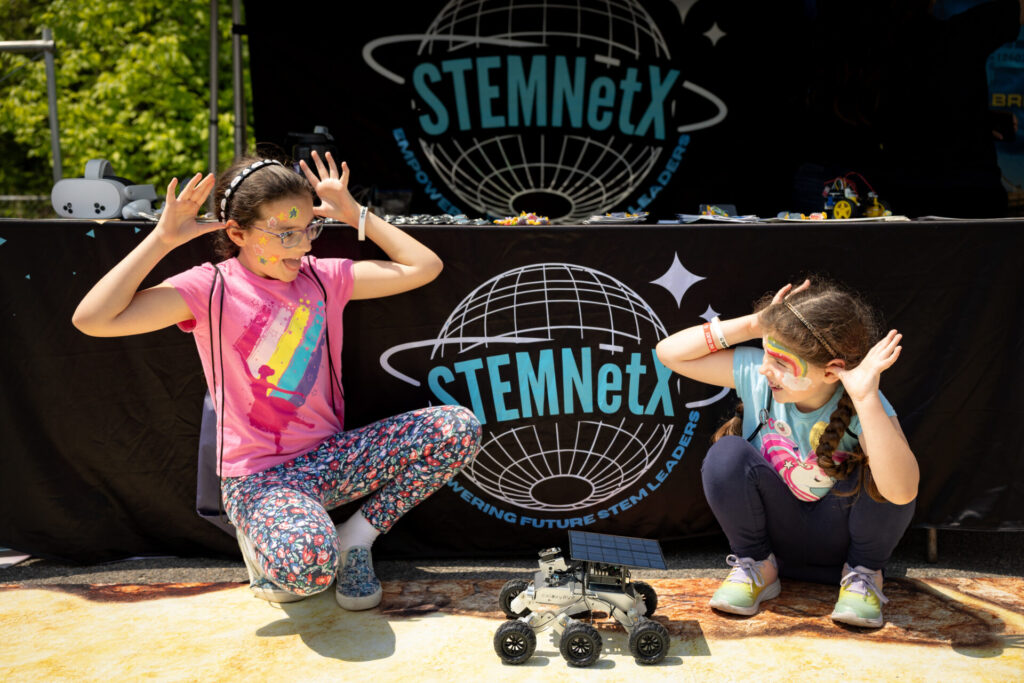
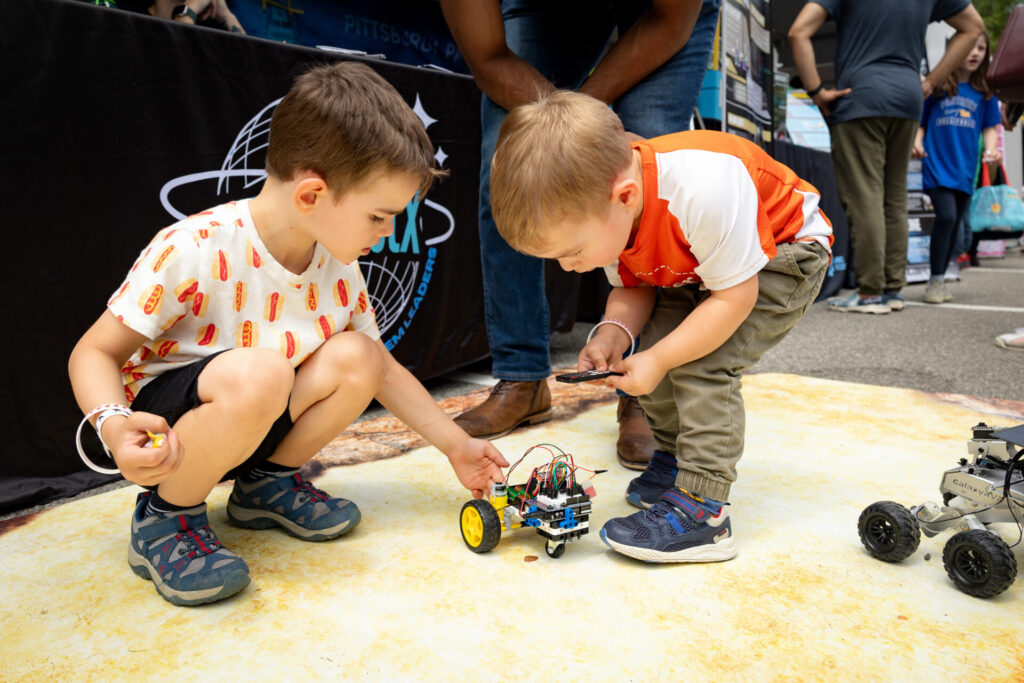
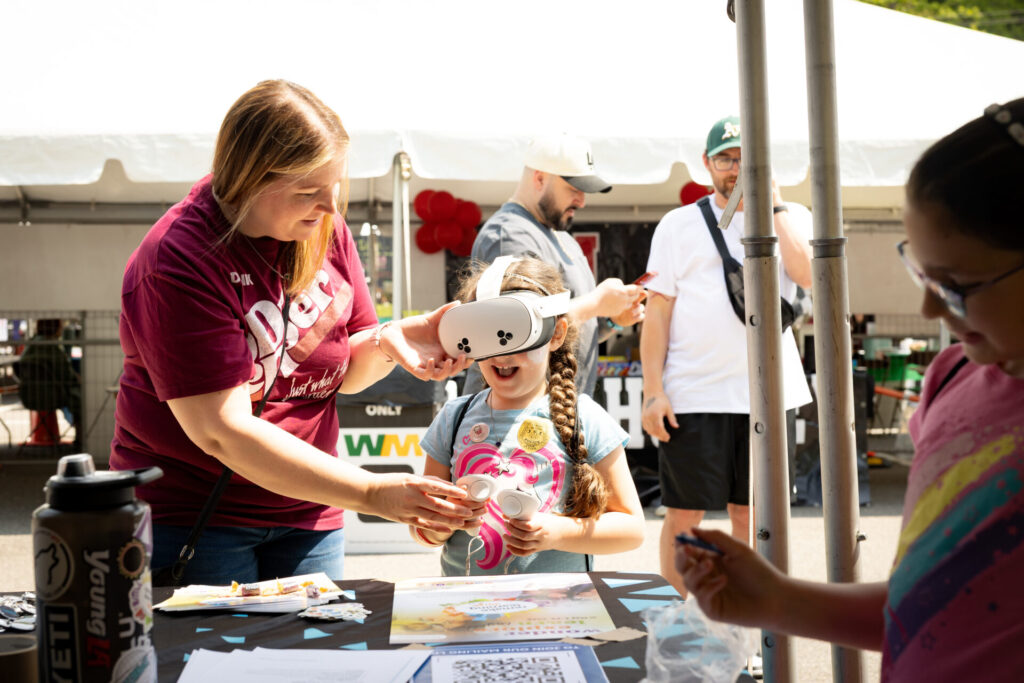
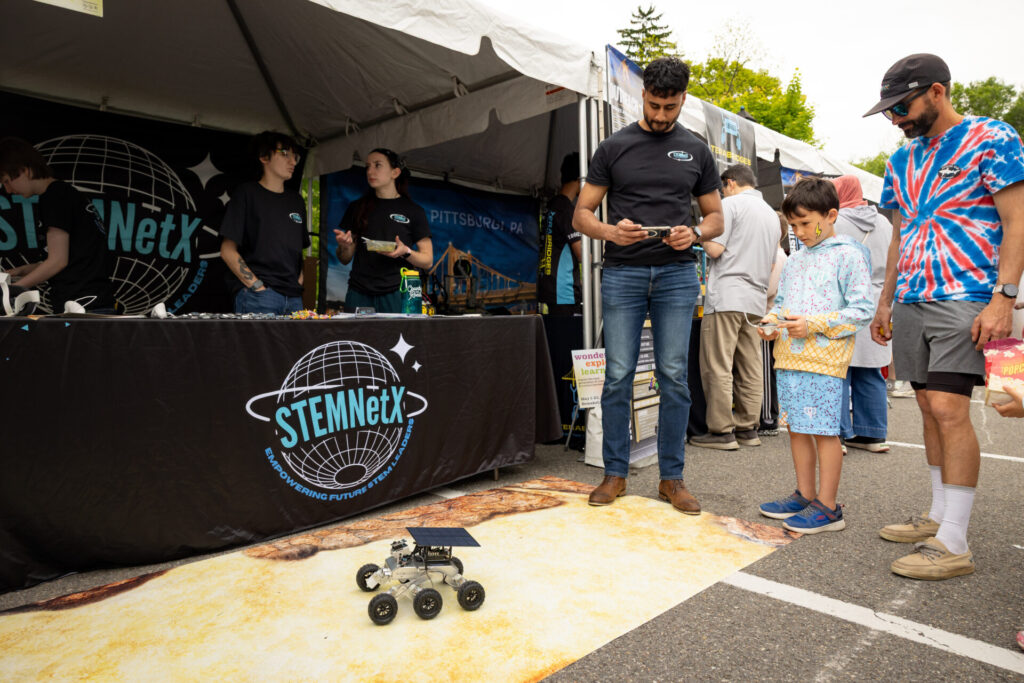
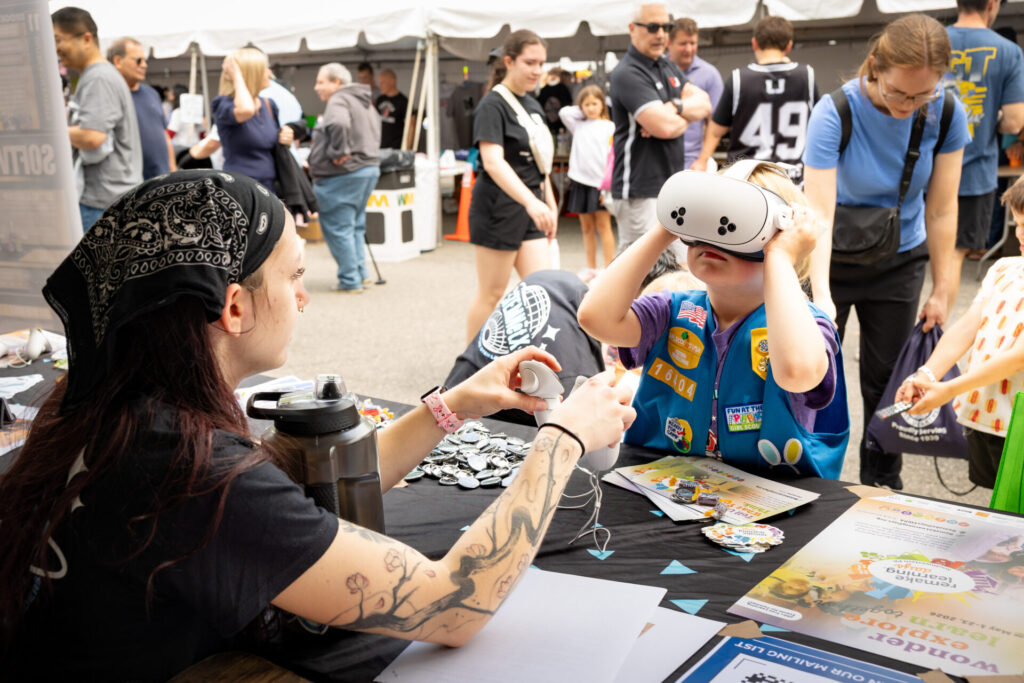
How did you kick off your summer? For families who attended a Remake Learning Days event hosted by STEMNetX, the answer was pretty awesome: They drove a miniature rover across the surface of Mars during an immersive VR/AR experience, while learning all about engineering, robotics and space science careers.
The rovers at this May 29 event, created through a project called “Unlocking the Final Frontier,” were designed in Pittsburgh with funding from a 2025 Moonshot Grant awarded by Remake Learning.
But while this project is rooted firmly in southwestern Pennsylvania, “when you put on the VR headset, the images that the students and the families were experiencing are actually images from Mars taken by the Curiosity rover,” says STEMNetX founder Dr. Rama Bala.
The excitement sparked by this experience — and stoked even further for the lucky group of high schoolers who participated in an immersive, two-week camp experience this summer — is central to the magic of “Unlocking the Final Frontier.”
“Our goal was to spark curiosity and show that STEM can be fun, hands-on, and something anyone can explore,” says Rebecca Callaway, who served as program manager for the project during the summer.
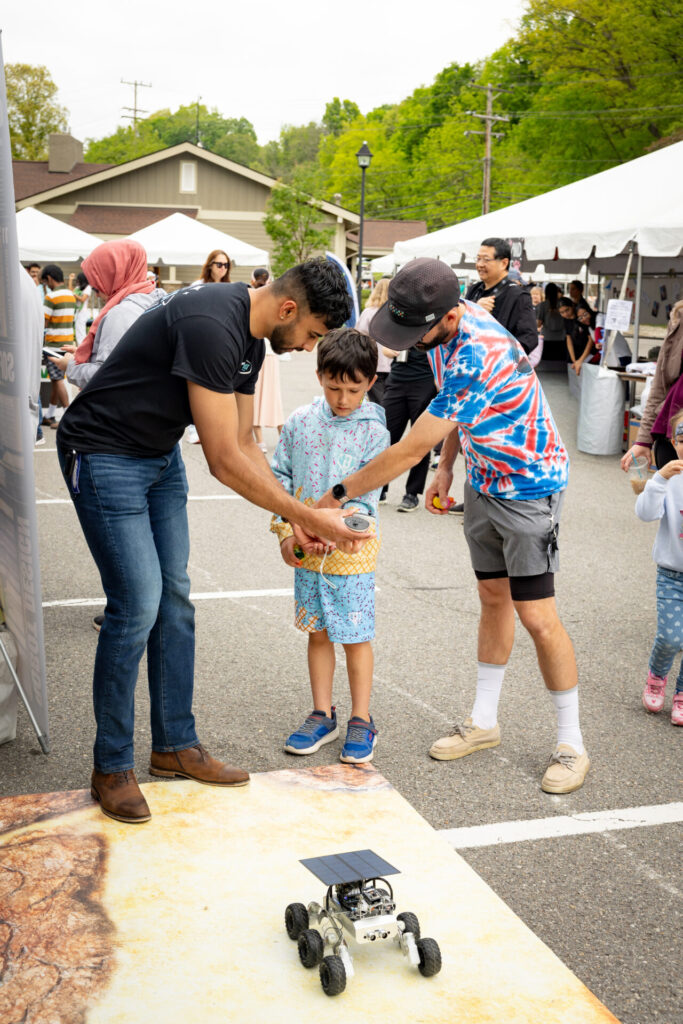
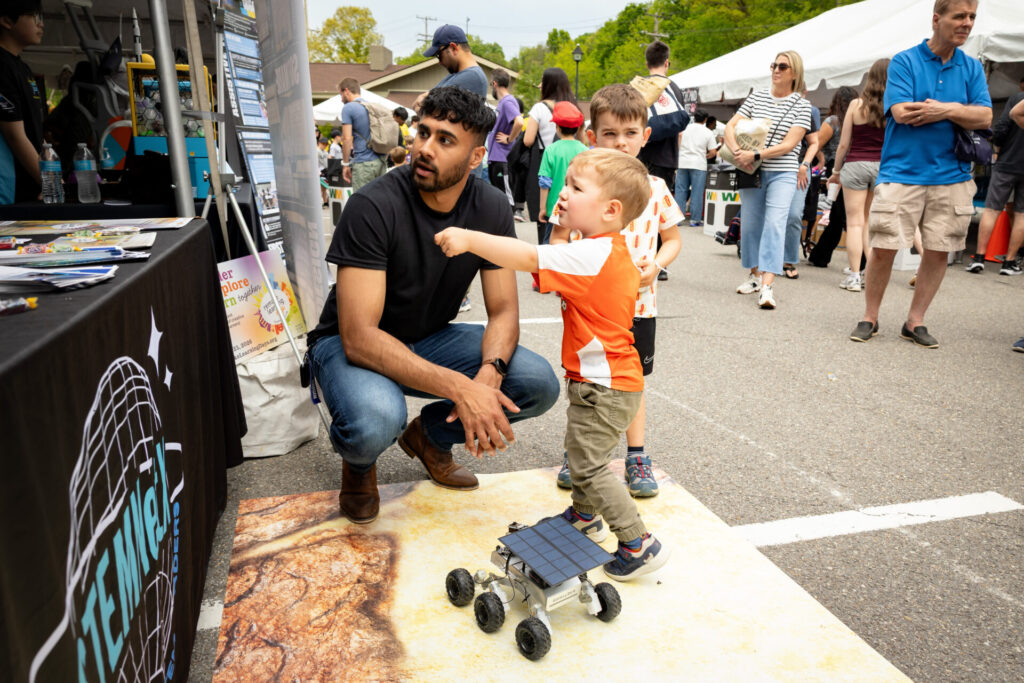
“One of our favorite moments was watching families experience the Mars rover and VR headset together. Kids would excitedly take turns driving the rover while their parents cheered them on,” Callaway says. “It was rewarding to watch something that might seem intimidating become approachable and exciting, with many participants leaving saying they had a lot of fun, thought it was really cool, and want to learn more about it.”
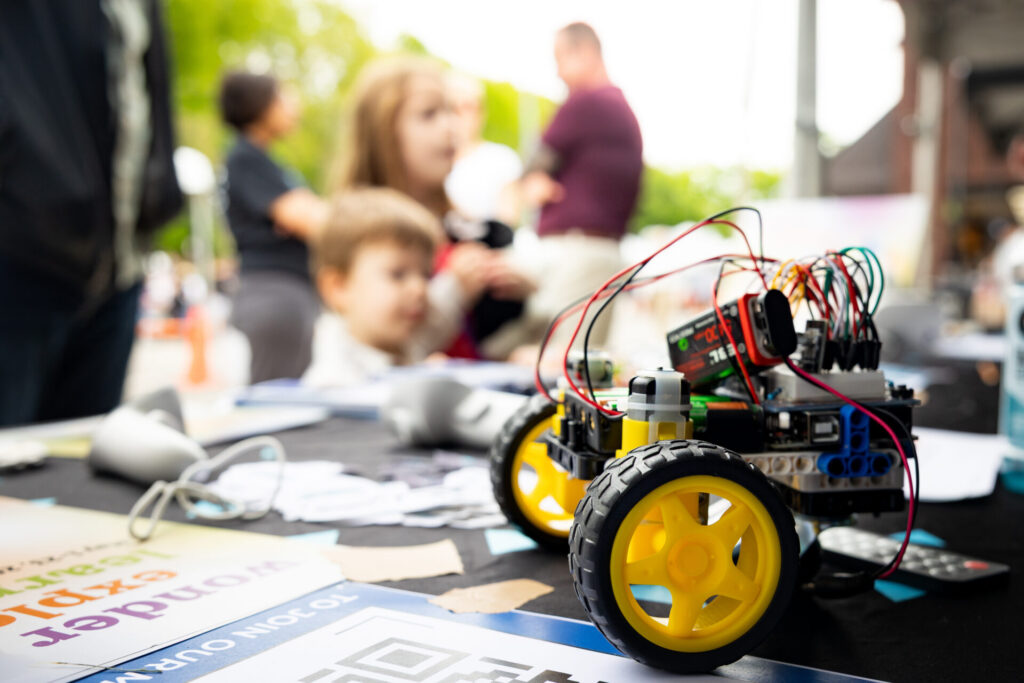
Those real-life Mars images, downloaded from NASA’s open-resource platform, were just part of the fun. Beyond the VR experience, Dr. Bala and her team also had what she calls a “bare bones” rover on display — its inner workings visible.
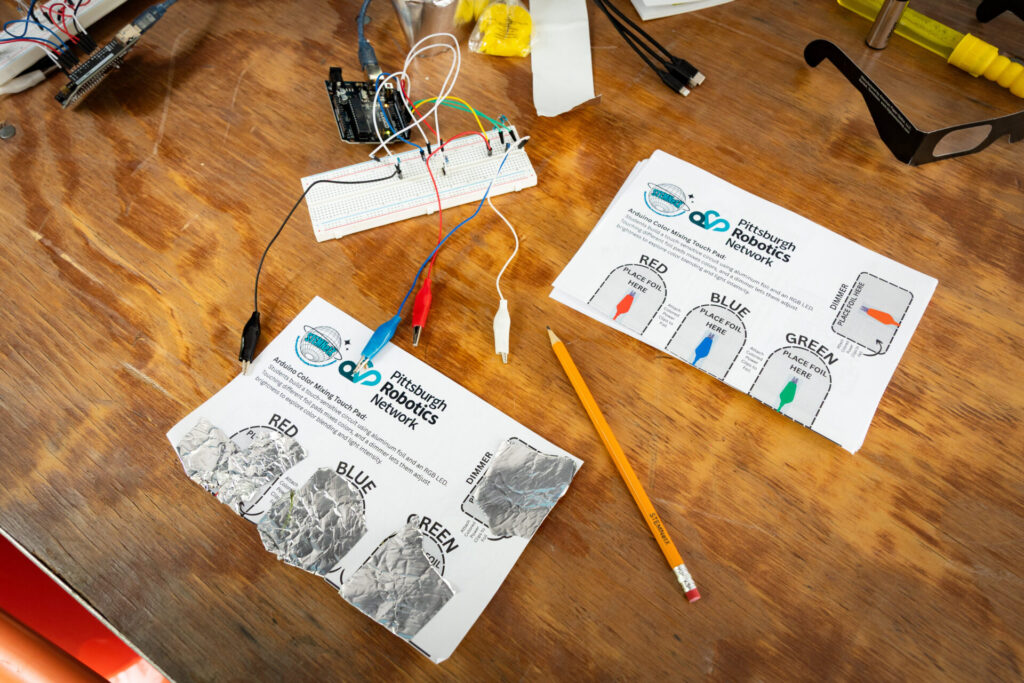
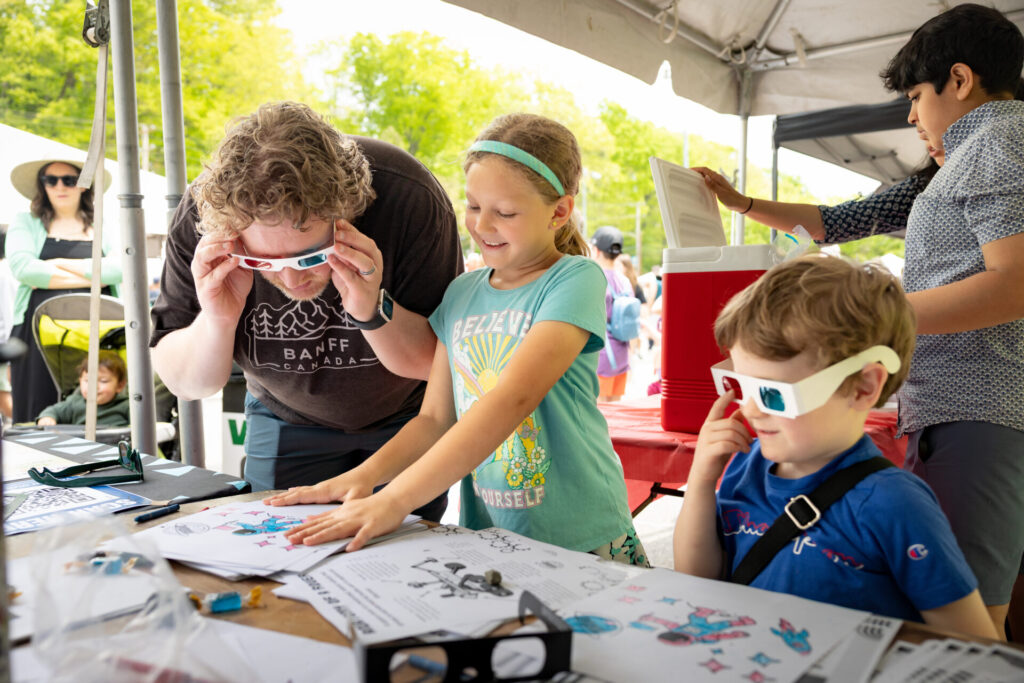
“The families and the children were able to see some of the electronics that actually go into building a miniaturized Mars rover,” Bala says, “and then we also hosted a series of simple experiments for the students to play with the actual boards that we integrated within the Mars rover.”
These moments of hands-on learning and discovery— seeing Mars itself, building with circuits and LEDs, and talking with people who are right now working in the field of space science in the Pittsburgh region — are what “Unlocking the Final Frontier” is all about.
Discovering the ‘Why’ Behind STEM Learning
When high school students from southwestern PA arrived for STEMNetX’s two-week summer program at Washington & Jefferson College, many had “with little to no experience in STEM fields, let alone electronics,” Bala says.
But once the program began, “the level of engagement was outstanding,” she says. “They learned about all the components and software coding. They learned about electronics, and they ended up building their own simulated rover.”
University of Pittsburgh graduate student Nathan Smith and mechanical engineer Shivron Sugrim volunteered to help design and code the equipment that the students used.
The goal was to create custom rovers that could be assembled and disassembled by the students, with a carefully chosen mix of the structural components and electronics, including servo motors and sensors, designed to allow easy access to plug in other external components.
The students had to pilot their rovers across simulated Martian terrain. As intrepid voyagers across this crater-pocked terrain, they encountered obstacles. Could these student-built cardboard rovers manage to push away bowling balls that represented Martian boulders?
Bala was delighted that 50% of the student teams were able to navigate the course successfully.
“This was an exciting opportunity to not only get students engaged in robotics and electronics, but to introduce them to space in this new way, this very interactive way,” Nathan Smith says. “You not only have this physical rover that you’ve built over this short course, but you also have the ability to experience it with your own eyes through the VR headset, which was very exciting.”
That assembly and disassembly was central to the experience, Smith says: “For learning, I think it’s really important to be able to mess with it yourself, take it apart, look how it works inside, and then put it back together.”
For Shivron Sugrim, this volunteer project was a chance to get deeper into robotics and space science, and to reconnect with the excitement of young students reveling in hands-on learning.
During his own high school years, “a physics professor would teach you physics purely, and a math professor would teach you math, and I’m like, ‘OK, but why are we learning this? How does this apply?’ Having a hands-on robotics project teaches you the why,” Sugrim says. “Now you’re connecting the physics and the math to something tangible.”
Along with building this STEM knowledge, the students also learned project management, became self-reliant and developed a constellation of other core skills that can help them in any field – whether they become space scientists or simply informed stargazers. At the end of the workshop, the students gave presentations about these experiences.
“We had the requirement,” Bala says. “Talk about the code that you worked on, talk about the challenges, talk about teamwork, camaraderie, communication, project management, and they addressed every single piece of it along with the research that they had done. So this was a really high-level display of their learning that has happened in a two-week process.”
Those presentations were “overall a great experience for the students,” she says. “And not only for the students but also for us, as educators. Because you see a room full of 24 students, all excited in unison about their learning process.”
What are the next steps in “Unlocking the Final Frontier”?
Now that Remake Learning has funded this pilot program, Bala and her team hope to extend this work beyond its initial one-year mission by bringing it to school classrooms around the Pittsburgh region.
“As an early researcher, I used to wonder: How do you get involved in these experiences?” says Bala, who now leads the space science pathways program at the University of Pittsburgh. She would love to see this project grow to help many young students discover the pipeline to space-related careers.
“I will absolutely love to expand this experience for the sole reason that this gets students excited. Everybody’s excited about space,” she says. “We’re in touch with over 40 schools in our region. We just need to find the funding to scale this up.”
Meet the Storytellers

Author: Melissa Rayworth
Melissa Rayworth is a writer for regional and global news outlets, and a communications consultant who works with people, foundations and companies to tease out and tell their stories across media.

Photographer: Jade Hambrick
Jade Hambrick is a photographer documenting life in Pittsburgh since 2020.