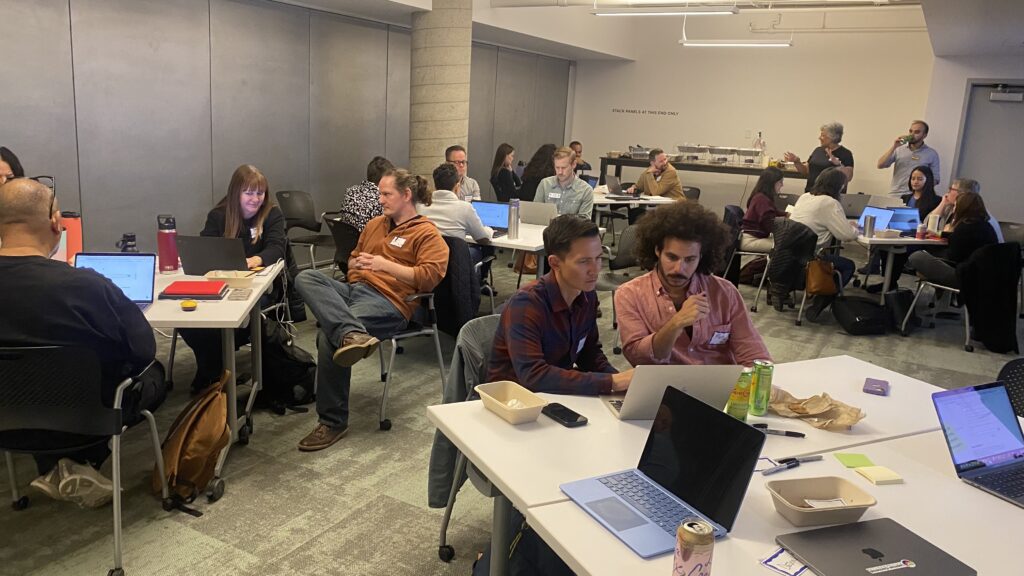
In cities and towns across the U.S., education leaders are reimagining school in ways that can help today’s kids “become lifelong-learning, innovative, creative, collaborative problem-solvers,” says Andy Calkins, co-director of Next Generation Learning Challenges (NGLC).
It’s no small task. And along with that challenge, schools are also connecting more deeply with families, helping kids build resilience and mental wellbeing, and helping with basic needs like food.
For school districts, “it means not only redesigning all of the systems and processes that had been designed around the old ideas,” Calkins says. It also requires “helping literally every adult in your system reframe their idea of their role.”
This multifaceted challenge was a prime topic of conversation at 2024’s invite-only Forge Futures convening of education leaders in Pittsburgh, and at the recent Forge Futures 2.0 in Nashville. In the wake of the first Forge Futures, Remake Learning awarded National Moonshot Grants to five innovative projects that are boldly broadening the definition of who is — and who could be — an educator.
These projects rethink current roles and crafting entirely new ones to support kids through their K-12 journey in our increasingly complex world.
From developing impactful summer learning and centering of young voices in the reimagining of high school to creative efforts that bring community members into classrooms, create meaningful school-based roles for pre-service teachers and leverage technology to elevate teaching, these projects are sparking change across the U.S. and beyond.
How might human-centered AI help school communities build learner-centered education and operating models?
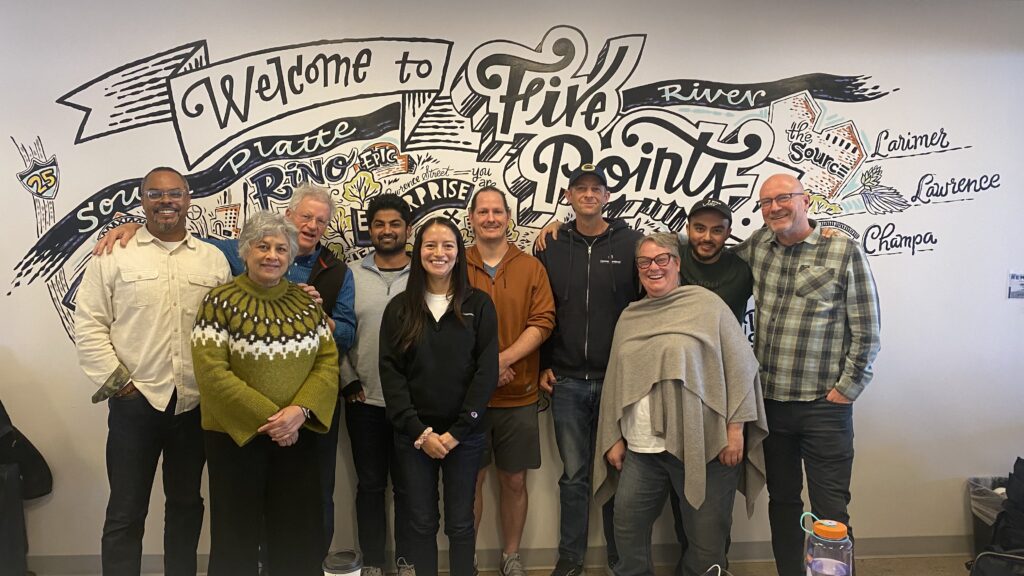
That’s the question asked by a project spearheaded by Collective Shift, an alliance convened by Calkins and his team at NGLC, along with a range of education leaders, including Incubate Learning’s founder and CEO Sujata Bhatt.
Many communities are succeeding in crafting a clear portrait of the skills their graduates should possess, Calkins says, but sometimes “the work stalls after they do the initial step of reimagining success.”
With help from a National Moonshot Grant, Collective Shift is exploring how human-centered AI use can drive the progress that school districts seek.
Used wisely, generative AI can help districts create “concrete first drafts” of the steps that will lead to real change, he says. “Then their people can take them the last 20 yards to make sure that they’re suitable for their own context.”
AI “co-pilots” can also become teachers’ allies in designing and delivering new kinds of learning experiences, allowing teachers to evolve into impactful learning coaches.
Bhatt has designed several AI co-pilots, including Gabby, a work-in-progress that’s being piloted successfully at schools in Bullitt County, Kentucky, among other places.
A teacher can describe a lesson they’ve taught previously to Gabby, Bhatt explains, and then say, “I’ve done this lesson this way — pretty successfully, I thought — for the last 10 years. But I also agree with this vision that we want to have more collaborative, creative problem-solving.”
Gabby then offers a range of portrait-aligned, learner-driven approaches, many of which the teacher might never have imagined. The teacher can choose one or several, adapting those ideas as they wish. Human teachers are firmly in the drivers’ seat, using AI “in a proactive way to help them lift their own capacities,” Calkins says.
In the process, they are modeling human-centered AI use for their students.
“That’s going to help them understand the relationship between their kids and AI that they want to help them develop,” he says, “so that they don’t fall into the valley of just using AI in ways that will just train them to become lazy thinkers.”
How might family members and experts participate at schools through teach-ins and skill-swaps that benefit everyone?
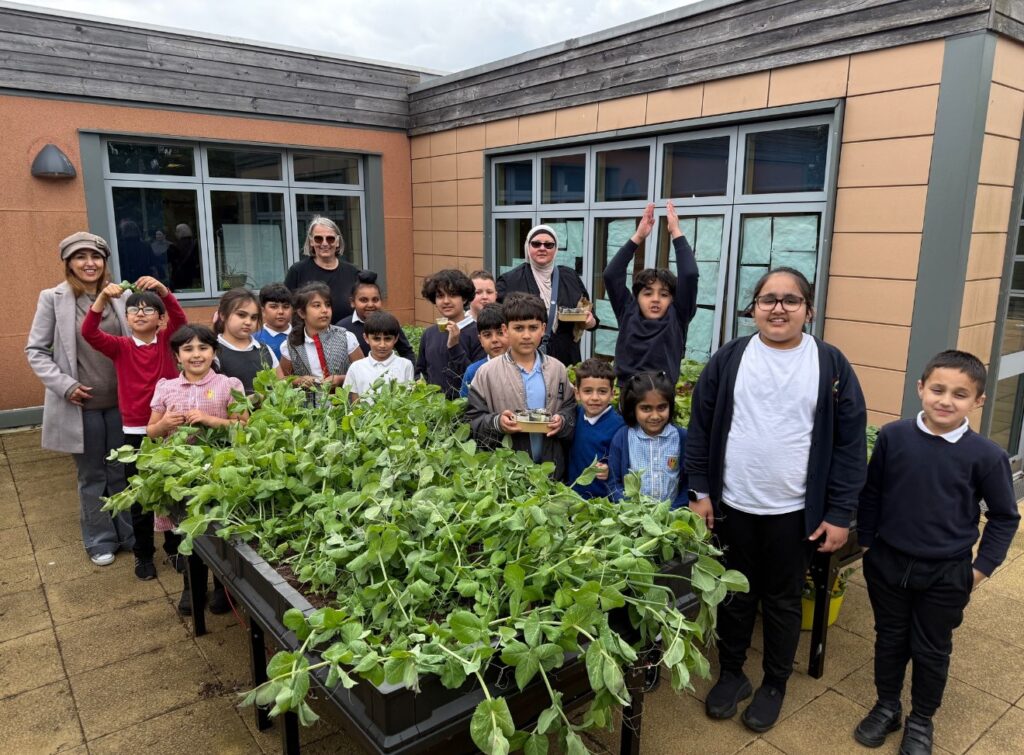
With help from Moonshot Grant funding, the City of Doncaster’s Food for Thought initiative is answering that question by hosting hands-on cooking workshops at schools, led by parents and other caregivers who serve as “unconventional educators,” says Sean Fearn, learning manager for City of Doncaster Council.
“They were able to show us recipes from their own cultures, and they were able to cook them and deliver them in the workshops, which were absolutely fantastic,” he says. “They weren’t only upskilling each other, but they were upskilling the staff members as well about ways that they cook.”
Working together on a recipe book helped some of these families improve their English language skills and connected all of them more fully to their children’s schools and to each other. Two of those recipes are now being used in school cafeterias across Doncaster.
The success of these intergenerational learning workshops has now rippled out from the two schools where they were piloted: “That model is now being adapted by various other schools in Doncaster,” Fearn says.
The Food for Thought team has also done “growing workshops,” where experts help school staff, parents and students learn to use self-watering, raised growing beds paid for by grant funding. The growing program can now be sustained even after the grant funding ends, Fearn says, because “they can kind of co-teach that to another group of individuals, with the parents and teachers working together.”
Parents have gotten nutrition advice during workshops while making meals and smoothies from vegetables they’ve grown, and the school’s catering team now uses school-grown veggies in lunchtime meals.
Families are getting healthier, connecting more fully to schools and forging new friendships, while students are seeing their cultures celebrated on the school lunch menu and learning to grow and enjoy fresh foods.
“It’s broken down so many barriers,” Fearn says.
Barriers are also breaking down through the efforts of ASU’s Foundation for a New American University, which has been aided by Moonshot Funding to ask:
How might pre-service teachers and “community educators” play a powerful role at K-12 schools?
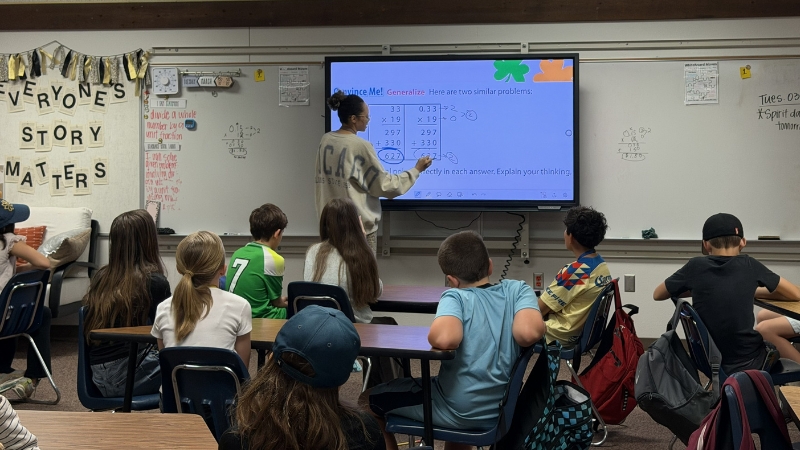
In order to thrive, students need not just one person but “a whole team of educators,” says Brent Maddin, executive director of ASU’s Next Education Workforce Initiative.
“I use that word ‘educator’ really intentionally, because it’s not capital-T teachers, although they’re certainly in the mix,” he says. “Who are all the people in the midst of our schools and in our communities that can play ever bigger roles — especially with an invitation and a little bit of training and support — to make a difference in the lives of young people and to dramatically improve the quality of life and the sustainability of the capital-T teachers.”
This Community Connectors on Campus project is a collaborative effort including Maddin’s team at ASU’s Mary Lou Fulton College for Teaching and Learning Innovation, as well as Point Park University in Pittsburgh and Mesa Public Schools in Arizona.
It operates as part of a wider initiative that includes 150 schools in 50 districts across 17 states, all committed to thinking differently about how they might staff their schools in a team-based way, rather than the one teacher/one classroom model.
What might those teams look like? One “really important part of that puzzle” is community educators, says Alex Nelson, senior project manager at Next Education Workforce. “All of those caring adults who are in and around schools — in families, in communities, who may be in professional roles or volunteer roles — have a really critical role to play in supporting students and in supporting teachers.”
Another key group: pre-service teachers. Many educators look back and marvel at how little time they actually spent in schools as pre-service teachers. What if that changed?
At the 2024 Forge Futures gathering, Maddin and Nelson were struck by the concept of schools having “chief experience officers.” They began wondering: What if a person in that role worked across teams to tap into the many community assets that sit in and around schools? And what if that role was played by pre-service teachers or other college students?
To find out, they brought college-age “community connectors” into full-day sessions with teacher teams to brainstorm about the potential of this role and explore what might be achievable to test at a pilot scale.
“We learned a lot, and we heard some really, really positive feedback from teachers about that time and capacity piece that having someone in this sort of role unlocks for them, having the ability to act on some of those really imaginative and creative ideas for connecting community to student learning,” Nelson says.
A “really fruitful partnership with Point Park” helped the team explore what a university’s role could be in supporting this kind of work, she says. The next step is creating systems and structures to get pre-service teachers and community members involved in ways that genuinely leverage their talents.
Too often when non-teachers interact with schools, Maddin says, that doesn’t happen: “The number of cybersecurity experts that show up and volunteer in schools, but find themselves cutting out laminate or something… it’s like, ‘Oh my goodness, we’ve missed the point, people!’ There’s such incredible gifts and talent,” he says, “and we just need to think about how we deploy them.”
What if summer learning experiences were redesigned to help kids develop the competencies they need to thrive academically, socially and emotionally?
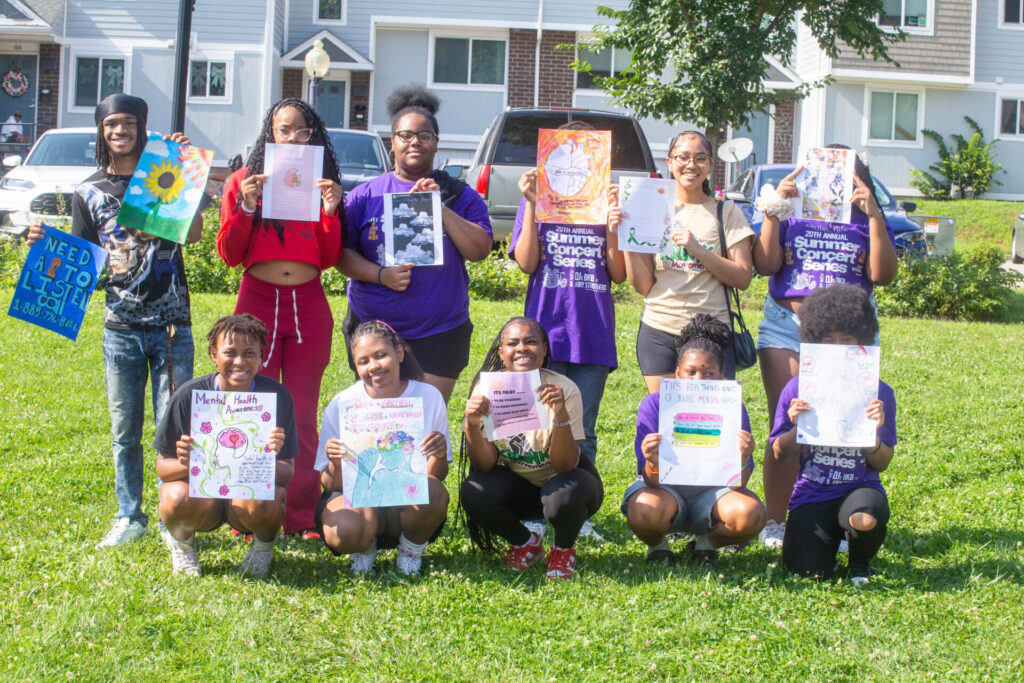
Like so many educators today, the folks at Horizons National, the National Summer Learning Association (NSLA), KP Catalysts and APOST think deeply about the competencies that adolescents need in order to thrive academically and personally. In collaboration with the XQ Institute, they’ve been working with local out-of-school-time programs on an ambitious effort called Summer Youth Engagement Possibilities.
This Moonshot Grant-funded work looks specifically at adolescent learning in nontraditional spaces. In a series of piloted summer learning programs, teens volunteer or get paid to work with K-8 students. Their grasp on STEM concepts grows as they teach younger kids. They also do career exploration, build interviewing and resume writing skills and learn from expert speakers. Some even do additional internships.
All of this is in the service of exploring a few key ideas, says KP Catalysts partner Merita Irby: “How do we identify the skills and the competencies that young people are really engaged in developing that are certainly happening in classrooms, but also not in the classroom? And how does this help us be able to name and claim — but also be more intentional about — the creation of those learning experiences from the get-go, and how to co-design those with young people?”
Along with helping teens see themselves as both learners and teachers, these programs let educators who normally work in K-12 classrooms use the flexible space of summer learning to grow. Looking at students through the lens of the XQ competencies, they think creatively about evolving the roles they might play in learners’ journeys.
In the process, some have discovered how challenging it is to shake off old habits.
Invited to codesign summer programs with students, some diligently arrived with lesson ideas already mapped out. One example: A teacher in Atlanta was asked to work on health-related summer learning. Knowing her students loved soccer, she arrived ready to explore the nutritional planning a pro soccer player might do.
“She thought, ‘We’ll bring in a nutritional consultant and bring in a soccer player.’ Very nice idea, right? She gets young people together on the first day, and they completely don’t want to do that,” says Dara Rose, senior VP of affiliate services at Horizons National.
“They’re like, ‘No, there’s other issues that we’re more concerned with, including community depression and mental health,’” she says. “So she tossed it up in the air, and she got some live coaching from Merita and some of the other national partners, and developed a kind of youth-led structure for the young people to develop projects that would involve the younger children in the program to deal with some of these larger issues.”
That soccer nutrition idea could have yielded a good lesson, Rose says, “but it wasn’t the point. It really was about having the young people identify questions that they have, things that they’re excited about, and then planning from there.”
How might we co-design a future where every young person in every community thrives?
Co-designing curriculum was also a priority for the fifth Moonshot Grant-funded project, led by the National Equity Project. During both of Remake Learning’s Forge Futures summits, a key topic was the importance of redesigning high school learning — and incorporating student voice in a meaningful way.
This work is being explored in many communities, including a cohort of nine large school districts in California, says Brett Bradshaw, managing director of program strategy and impact at The National Equity Project. Bradshaw’s organization was partnering with these districts, along with Transcend Education and PACE (Policy Analysis for California Education), when he saw the opportunity for a National Moonshot grant at Forge Futures.
With some funding already in place from California-based grant makers, he says, they applied for a Moonshot Grant to help fuel a 10-year effort that prioritizes adult-youth codesign at four of the nine districts: Long Beach Unified, Oakland Unified, Garden Grove Unified and Santa Ana Unified school districts.
In this work, the National Equity Project uses a human-centered design methodology that offers “a set of mindsets and modes to try to see the system, articulate some of the needs and how to define some of the challenges,” Bradshaw says.
In the process, they delve into “how districts have tried to center the voices of young people and then follow up with some empathy interviews and some listening to really understand: What are young people going through? How do they see the system?”
At Garden Grove, a tool called the developmental relationships survey lets young people indicate which adults in their school system genuinely know them and demonstrate caring and concern. Similar efforts are being explored throughout the cohort.
“Our idea for this school year is that each participating district would have already articulated a case for change, and then would identify either a single pilot or a set of pilots that they would want to put into place starting in the fall of 2026,” Bradshaw says.
All of this “really is about trying to imagine a new future, being imaginative about some new solutions, but then really experimenting and prototyping and testing and learning along the way,” he says. “So that dovetails really nicely with the frame that the Moonshot Grant gave about ‘What’s your preferred future of learning?’”
Rethinking and freshly creating roles is challenging work. But as each of these ambitious projects has been proving across the U.S and in the U.K., expanding the definition of “educator” can bring a broad spectrum of rewards that help districts tackle the fast-evolving challenge of 21st-century teaching and learning.
“In the end, schools should be in the game of human development, not content pushing,” Collective Shift’s Sujata Bhatt says. We should be teaching “a love of learning, a need to know, a desire to improve — deliberate practices, strategies and pathways to figure out how you want to contribute to the world, your community, and build a happy and thriving life. That is the purpose of education.”
Meet the Storyteller

Melissa Rayworth
Melissa Rayworth is a writer for regional and global news outlets, and a communications consultant who works with people, foundations and companies to tease out and tell their stories across media.