
Plants thrive in the fresh air and sunlight. Children do, too. The benefits of outdoor learning have long been understood instinctively, and a growing body of research is now documenting these benefits—especially in early childhood development.
“Converging evidence strongly suggests that experiences of nature boost academic learning, personal development, and environmental stewardship,” an analysis in Frontiers in Psychology explains. “Report after report – from independent observers as well as participants themselves – indicate shifts in perseverance, problem solving, critical thinking, leadership, teamwork, and resilience.”
Unfortunately, outdoor learning spaces aren’t always easily accessible, especially for students from urban or suburban areas. Even in communities with ample green space, the connection between the outdoors and learning experiences can go unexplored.
With this in mind, Remake Learning has awarded Moonshot Grants to three new programs designed to increase access to nature-based learning opportunities for Pittsburgh-area students.
“By connecting students with nature through direct engagement with green technology, outdoor stewardship, and horticulture therapy, these projects give students and their communities an active voice in the future of their region and the tools to shape their environments,” says Tyler Samstag, executive director at Remake Learning.
Like all Moonshot-funded projects, these began with bold questions: What if…?
What if youth-led civic engagement could begin with experiences in nature?

On a recent Tuesday night, nine high schoolers gathered at Lake Carnegie in Highland Park, holding fishing rods—some for the first time. After months of biking, forest bathing, and nature walks, they were ready to help one another try something new.
This was one of many experiences made possible by the Pittsburgh Parks Conservancy’s Moonshot-supported program. To recruit participants, educators like Ivy Ryan met students face-to-face at schools like Westinghouse 6–12, encouraging them to sign up directly.
Each week, the group met at the Homewood YMCA to engage in creative projects, photography walks, and outdoor exploration. Students co-designed the experience—choosing field trips, nature topics, and how to spend their time together.
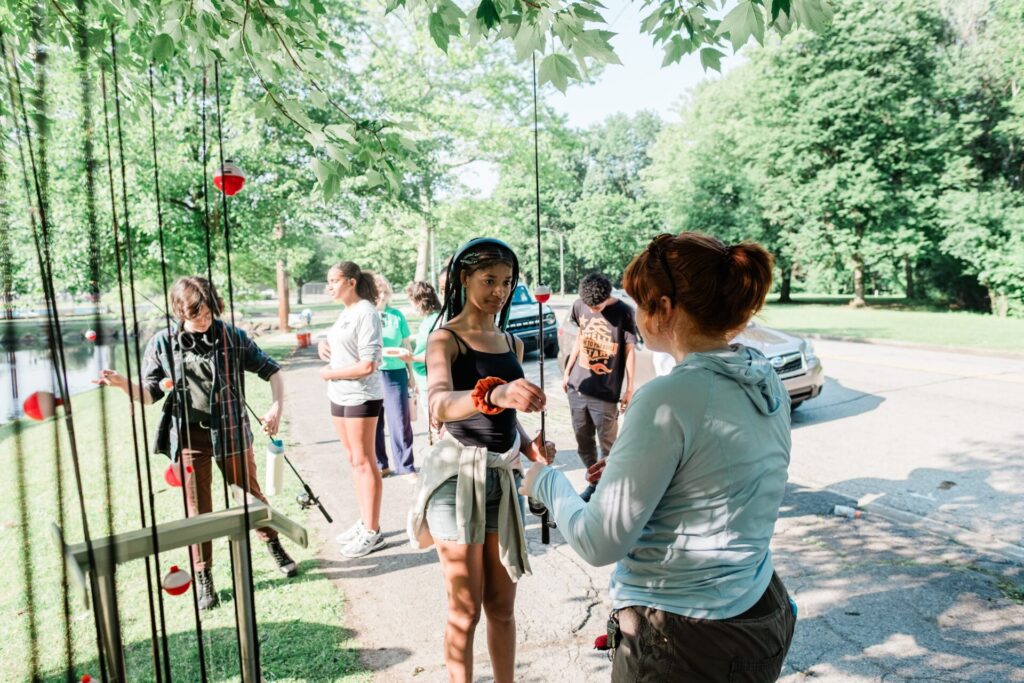
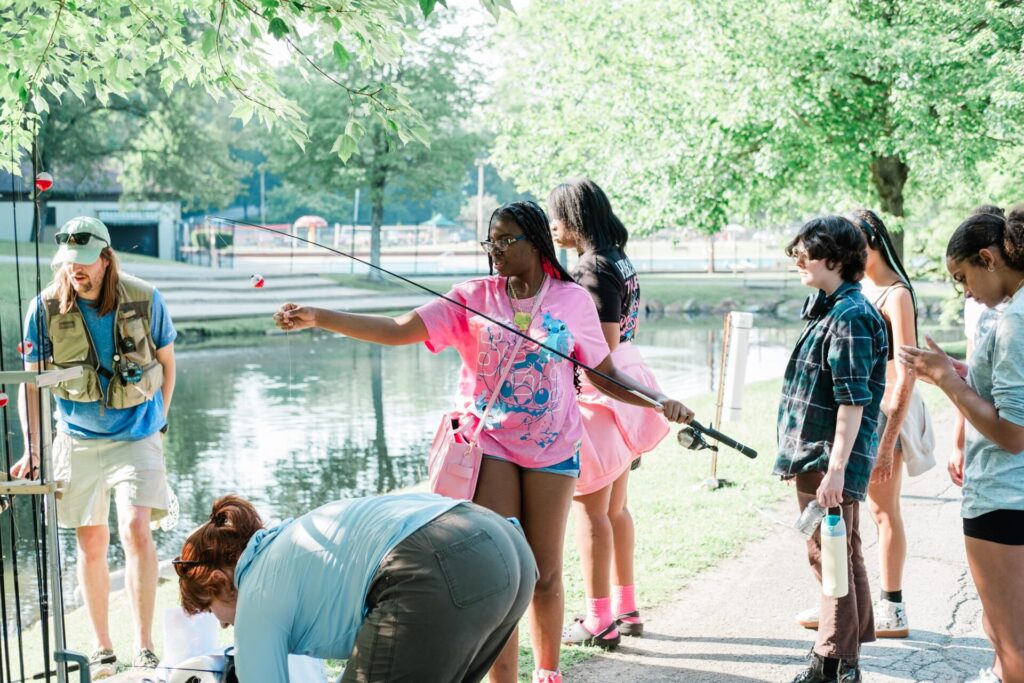
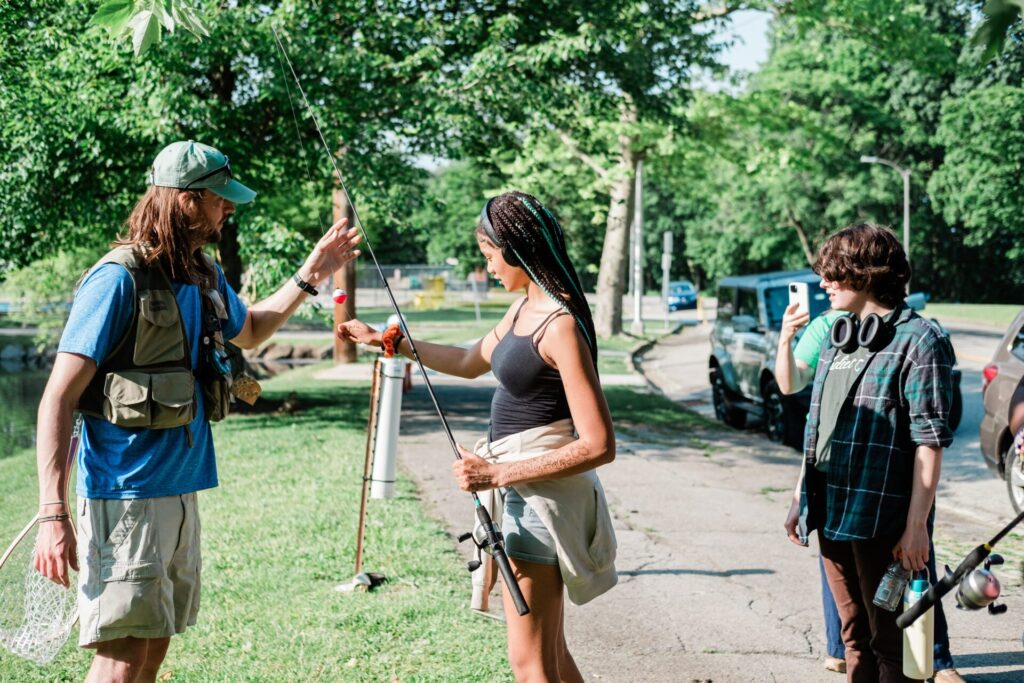

There was structured science learning, like birdwatching in Schenley Park. But just as often, learning emerged from presence and wonder—like skipping rocks or spotting a baby owl.
“We got to see the owl nest,” says student Basil Wedig, a recent graduate. “There was a baby owl. It’s just so cool. I’d never seen owls in their nests before.”
During a fishing trip, a student shouted, “Oh my gosh, y’all! Turn around. Look, look, look!” Everyone paused to watch a great blue heron soar overhead.
“That’s a great blue heron,” an outdoor educator said. “They have really long legs.”
“Yeah,” a student replied softly. “Herons are cool.”
Ryan notes that this kind of connection—between peers and with nature—grew steadily: “It’s been really amazing to see them put their phones down and be laughing together.”
What if vacant land could become a learning lab for environmental justice?
Kelly Henderson, executive director of Grounded Strategies, has long believed that restoring vacant land improves wellbeing and strengthens neighborhoods. So when she visited Milwaukee’s Green Tech Station with a group led by City Planning Director Dr. Jamil Bey, inspiration struck.
“They’re effectively doing hands-on field trips focused on things like storm water and renewable energy, with a very Afrocentric-inspired art that is aligned with different water themes on the site,” Henderson explains. “We got to all witness that together, and then started brainstorming while we were on that trip.”
Back in Pittsburgh, the group—including partners from the city’s Department of Planning, evolveEA, and Pittsburgh Water and Sewer Authority—began envisioning a similar space: a hands-on outdoor learning site built on vacant land in an environmental justice-impacted neighborhood.
With support from Remake Learning, they’re now moving intentionally, engaging community voices before any ground is broken.
“We’ve been moving very slowly, because we want to make sure that this is done intentionally, and make sure that we have all the right people at the table,” says Henderson.
Their current priority is identifying neighborhoods where strong relationships already exist—or where deeper community ties can be cultivated. That means finding out-of-school-time educators, local organizers, and environmental justice leaders whose efforts could benefit from new infrastructure.
“We’re talking about this as a two- to three-acre project that is going to take two to three years to build, and that will cost $2 million to $3 million. Two to three is the magic number,” Henderson says.
The first site will serve as a pilot—but the long-term vision is scalable: “We’re only going to start with one. But if this goes well, we could potentially make many of these all over the city.”
What if a greenhouse could be a hub for learning and healing?
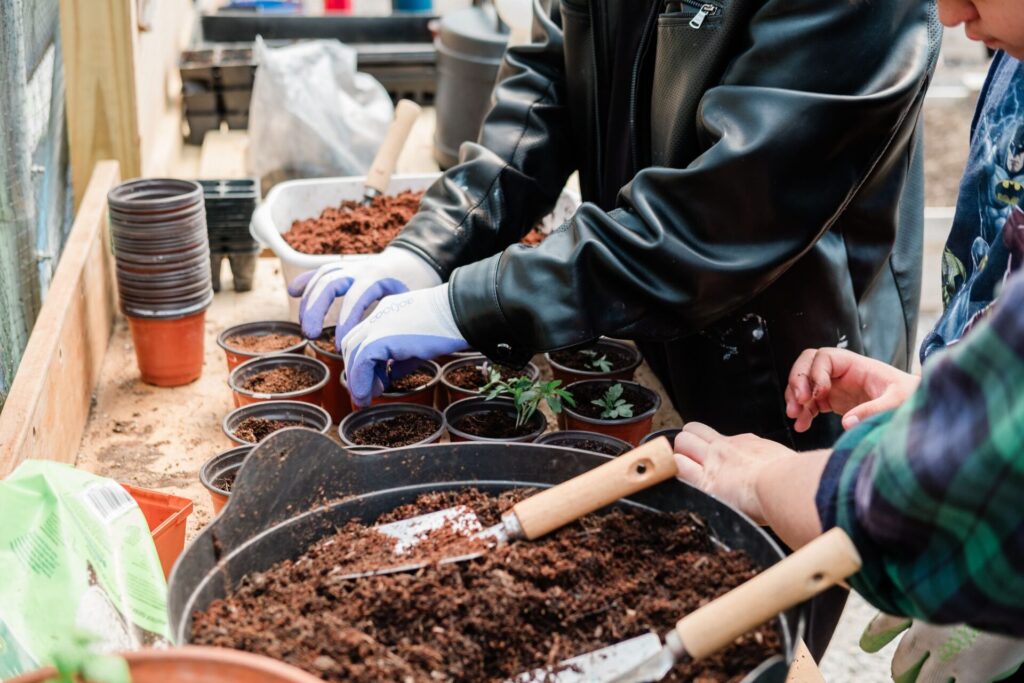
At Northgate High School and Middle School, the greenhouse is more than a place for plants—it’s a space for science, therapy, and student leadership.
Through a partnership with Chatham University’s Eden Hall Campus, Oasis Farm & Fishery, AHN’s Chill Project, and AGH Suburban, students are participating in horticulture therapy sessions and internships that nurture academic skills and emotional wellbeing.
Educator and horticulture therapist Ash Emmrich works with students across grade levels and disciplines. On one spring afternoon, seventh graders learned about ecology and plant diversity—while practicing mindfulness and motor skills in the greenhouse.
“We’re constantly trying to find ways to connect some of these very grounded, scientific gardening aspects of the program with some of our mindfulness skills,” Emmrich says.


The hands-on nature of the work fosters reflection, resilience, and responsibility.
“When we’re planting, things happen. They’re experiencing failure in a safe place, if their plant doesn’t make it,” Emmrich says. “But when we’re working on various tasks, especially with fine motor skills and gross motor skills, it takes away that goal outcome of, ‘I need to be able to do this.’ And it brings you into a space where you’re thinking, ‘I’m pruning. I’m harvesting.’”
Emmrich collaborates with art, math, and science teachers to expand the greenhouse’s uses. Students draw, measure garden beds, and even apply geometry skills in the space. Life skills classes and student clubs also use the greenhouse regularly.
“We’re making our greenhouse as equitable as possible with the modifications and accommodations to support some of their needs,” she says.
Despite its impact, horticulture therapy remains rare in public schools.
“This new connection is also so old,” Emmrich says. “Nature-based practices have been around for generations. Our ancestors were always connected to the land. So now it’s almost as if we’re putting in more scientific language and research-based, evidence-based practices, to be able to say, ‘Yeah, that was always happening. But now we understand why.’”
Authored by

Melissa Rayworth
Melissa Rayworth has spent two decades writing about the building blocks of modern life — how we design our homes, raise our children and care for elderly family members, how we interact with pop culture in our marketing-saturated society, and how our culture tackles (and avoids) issues of social justice and the environment.