
Trinity Area School District has been educating kids in Washington, Pa., for more than a century. At age 101, the district is rich in history and in community spirit.
“When someone is in need, it’s all hands on deck. When we host committee meetings with board members, teachers, administrators, parents and so forth, it’s just this vibe of ‘Let’s do it. Let’s work as a team,’” says Constance DeMore Savine, the district’s Director of Curriculum and Instruction.
“There’s a recognition that we really can do so much more together than any of us can do alone,” she says.
When DeMore Savine and her colleague Dr. Samantha Shinsky, who serves as the district’s Director of Technology and Innovation, looked at last year’s application for Remake Learning’s Moonshot Grants, they noticed that civic engagement and community involvement were key components.
The ongoing substitute teacher shortage was also on their minds.
“We thought, ‘How can we capitalize on that spirit to marry some of this and fill the gap of not having substitutes?” Shinsky says. “We have a community filled with brilliant, devoted, caring people who want to give back — who want to do good. Let’s tap into that resource.”
Some community members were already involved with the 10 CTE (career and technical education) programs that operate at Trinity Area’s high school. “We’ve really learned from these individuals that there are people out there who are willing to help,” Shinsky says. “You just have to ask.”
With help from their Moonshot Grant, Trinity Area has begun doing that asking.
They created the “It Takes a Village” program to train what they call Community Education Liaisons (CELs) to work as substitute teachers at the district’s schools.
It Takes a Village has three main goals:
- Giving community members a meaningful way to be involved with the school and to connect more deeply with their community
- Helping fill the need for short-term teaching support, whether for one day or for several, depending on the district’s need and what the CEL’s schedule allows
- Giving students exposure to the careers and life experiences of community members, to help them as begin envisioning their own future careers
The program was announced last September, with a public Q&A held in early October to share details.
Applicants with a Bachelor’s degree (a Pennsylvania state requirement) were offered 40 hours of paid training at $16 per hour, along with ongoing mentorship. Participants would have that training during November and December to prepare to begin teaching, as needed, in late January when the spring semester began.
Participants were also offered a $2,000 stipend upon completing their training and would be paid at the district’s standard substitute rate for the days that they work.
Savine and Shinsky were expecting perhaps two or three applicants. Within less than 10 days, 30 people had applied. And while the stipend and training did appeal to these folks, participants were clear about why they got involved.
“They said, ‘It’s not the little bonus or the money. It’s that we’ve always wanted to give to the community. We always wanted to do good for the young generation of learners,’” Savine says. “Our work bridges that gap.”
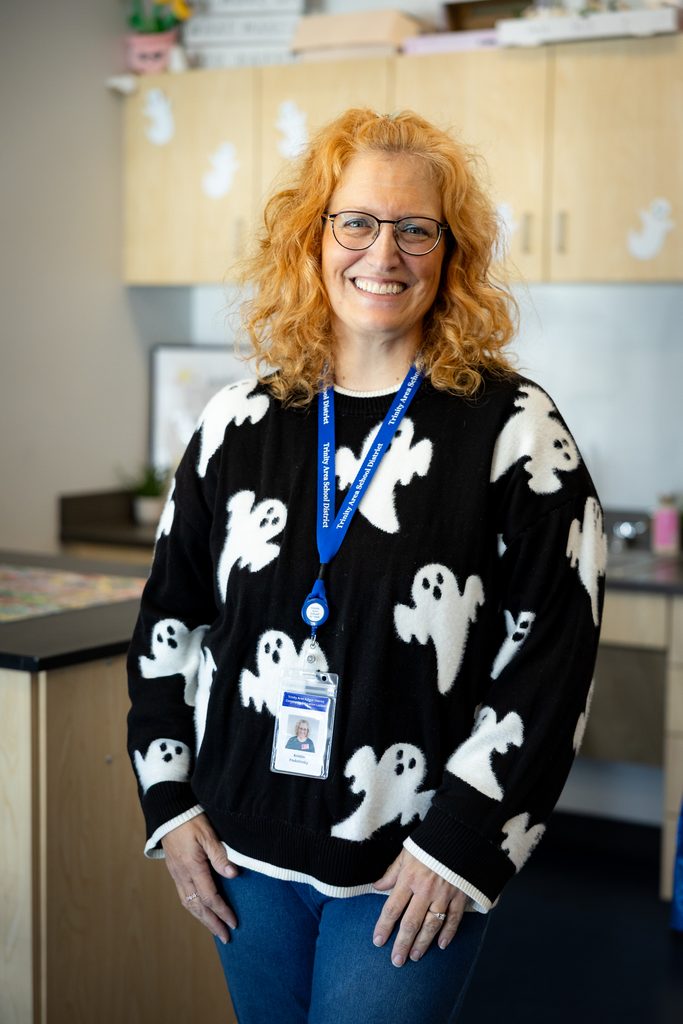
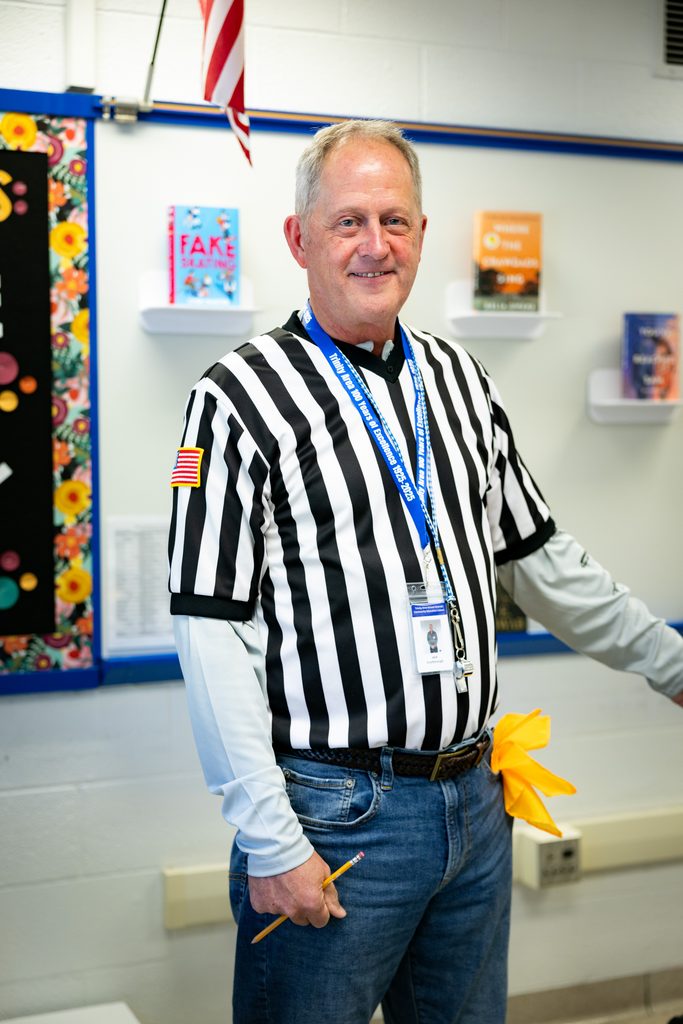
Among those who have embraced the job of CEL: local police officer Andrea Potts.
“What initially drew me to this opportunity was the chance to engage with students in a different, more sustained way than my role as a police officer typically allows. Being present in the school setting created a unique avenue to build rapport, foster trust, and engage in meaningful conversations with youth in a proactive and positive environment,” Officer Potts says.
“The opportunity to engage in open dialogue, answer questions, and simply be a consistent presence has allowed for genuine communication on both ends,” she says. “Seeing students become comfortable, engaged, and excited to interact has reinforced how impactful this role can be, not only academically, but relationally.”
Along with working from lesson plans prepared by the teachers for whom she substitutes, Potts has also taught from her own experience: Among other things, she has offered history lessons on Miranda Rights.
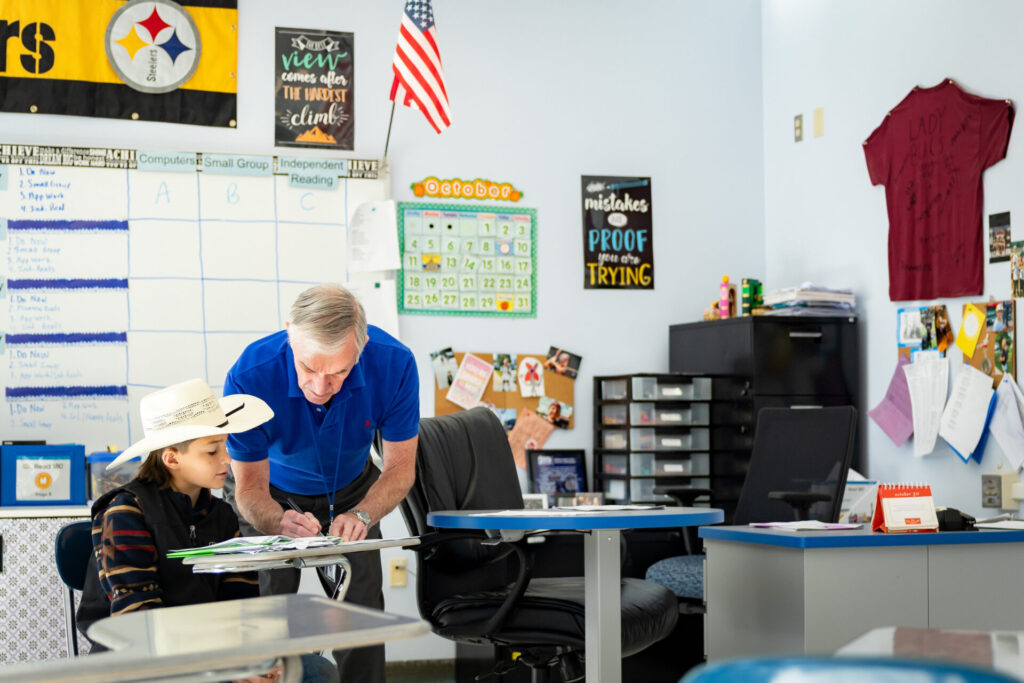
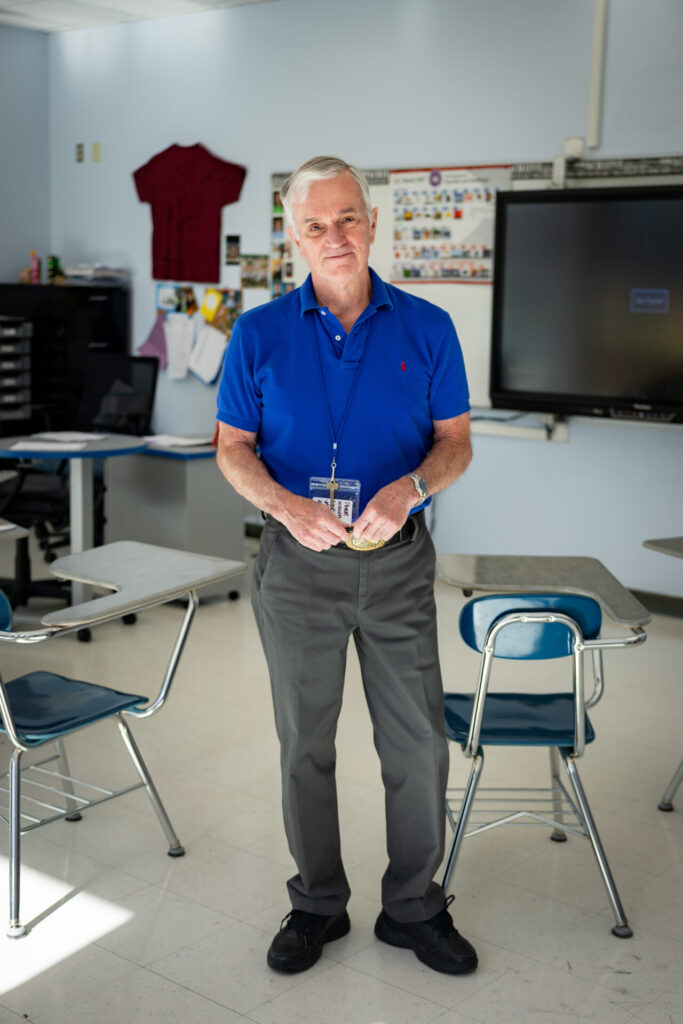
Another CEL named Art Sullivan, is a lawyer by education and a very proud coal miner by trade.
“Most attractive about this opportunity was the chance to converse with kids. We could, and did, learn from each other. I came to understand their world,” Sullivan says. “They came to better understand the world awaiting them.”
Like Potts and Sullivan, other participants are glad to be bringing their expertise into Trinity Area’s classrooms, whether they are in the midst of their careers or they are retired. One CEL is a former labor and delivery nurse with 25 years’ experience.
“She has subbed in our sports medicine program,” says Shinsky.
Given the students’ interest in medical careers, high schoolers recently peppered this retired nurse with questions. They got answers filled with subject-specific terminology, described in real-life contexts.
“These people coming into our schools — these beautiful people — they know the real world, and they know the careers they’ve worked in,” says DeMore Savine. “We recognize that they’re experts in their respective fields.”
So while “some might be following the sub plans, or they might be giving a test that was left, and that’s important,” she says, they are also invited to get creative while “filling their time with things that they know about.”
This creative freedom for CELs is very much in the Moonshot spirit, given the grantmaking program’s focus on thinking creatively and combining an organization’s experience with a bold vision for the future for learning in southwestern Pennsylvania.
“The Moonshot Grant is one of the best grants,” Shinsky says. “Your wildest ideas, you can bring to fruition.”
Meet the Storytellers
Melissa Rayworth
Melissa Rayworth is a writer for regional and global news outlets, and a communications consultant who works with people, foundations and companies to tease out and tell their stories across media.
Jade Hambrick
Jade Hambrick is a photographer documenting life in Pittsburgh since 2020.