
Last summer, community members gathered at Penn Hills Charter School of Entrepreneurship (PHCSE) to meet a new addition to the school community: an artfully decorated, multitasking shipping container named Zeus.
The ZEUS (Zero-waste Ecological Upcycling System) Anaerobic Bio-Digester is the centerpiece of a growing eco-economy in Penn Hills that connecting and supporting a wide range of community organizations and entrepreneurs, diverting food waste from landfills, and offering hands-on STEM and environmental learning to kids who attend PHCSE.
At the unveiling event, which took place on July 31 last year, organizers gave tours of the ZEUS bio-digester. Visitors learned how the machine, nestled inside a shipping container, converts food waste into liquid fertilizer called Soil Sauce.
The food waste, which otherwise would have gone into a landfill, includes cafeteria scraps collected by PHCSE students and other scraps gathered by a growing number of community partners, including Penn Hills Library.
As that food waste is anaerobically bio-digested, it produces the problematic greenhouse gas methane. That’s not a problem for ZEUS: The bio-digester captures the methane and uses it to generate electricity to power itself.
Students and faculty were intrigued by the presence of the shipping container and the mural that decorates it, says Dan Little, CEO of Involvemint, the organization spearheading this project. Waste to Wealth: The PHCSE Circular Learning Ecosystem which is supported by a Remake Learning Moonshot Grant.
And at that unveiling last summer, tours of the bio-digester were just the beginning. Along with learning about the environmental benefits of the initiative, visitors also discovered how this machine connects to the larger eco-economy emerging in their community — and how participation can benefit everyone.
CREATING A CIRCULAR ECO-ECONOMY
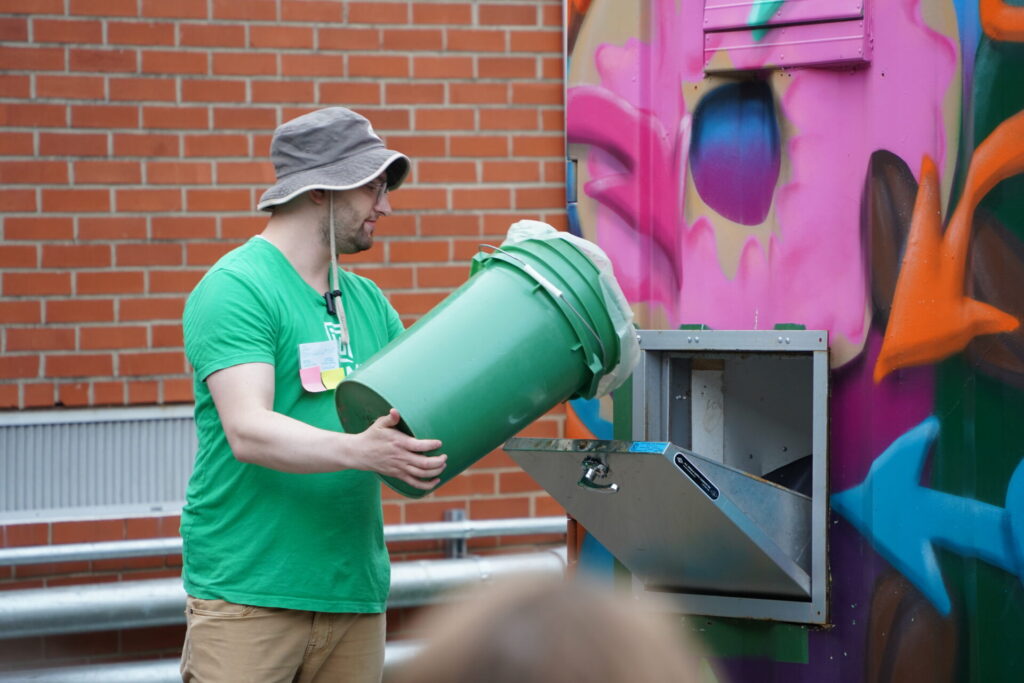
Here’s how the eco-economy works: When people feed food waste into the bio-digester and create Soil Sauce, they’re creating something of value. Soil Sauce has now become a tangible, tradeable product connecting school operations to a real community exchange. But rather than selling the Soil Sauce for cash, Little explains, “we’re actually creating a credit.”
“It’s a regenerative asset that is sort of underlying the whole fabric of the eco-economy,” he explains. Participants in the eco-economy can exchange credits for Soil Sauce or any other good or service that’s offered on the network.
Just as banks once backed their currency in gold, Little says, “we’re backing the currency in black gold, which is fertilizer. And so the students, through that, learn about economics and how the banking system works. They can learn how it can be applied in a green context, which is what we’re doing here.”
The credits, Little says, are “designed to engage businesses and designed to engage families, so they can partner with the school, and also take part in the eco-economy, and potentially divert food scraps.”
It’s an added bonus that PHCSE students get to see this entrepreneurship in action.
Information about the ZEUS bio-digester has been integrated into their curriculum, helping them learn that it’s possible to take something normally destined for a landfill and create value from it. That innovative thinking could then inspire them to apply these principles of economics themselves.
“We want to start early with the young entrepreneurs that are in the school, and give them a tangible experience of money: what it is and how it works,” Little says. “It’s our ultimate goal to have people ultimately have money work for them, as opposed to them just working for money.”
MULTIPLE LEVERS TO UPLIFT COMMUNITIES
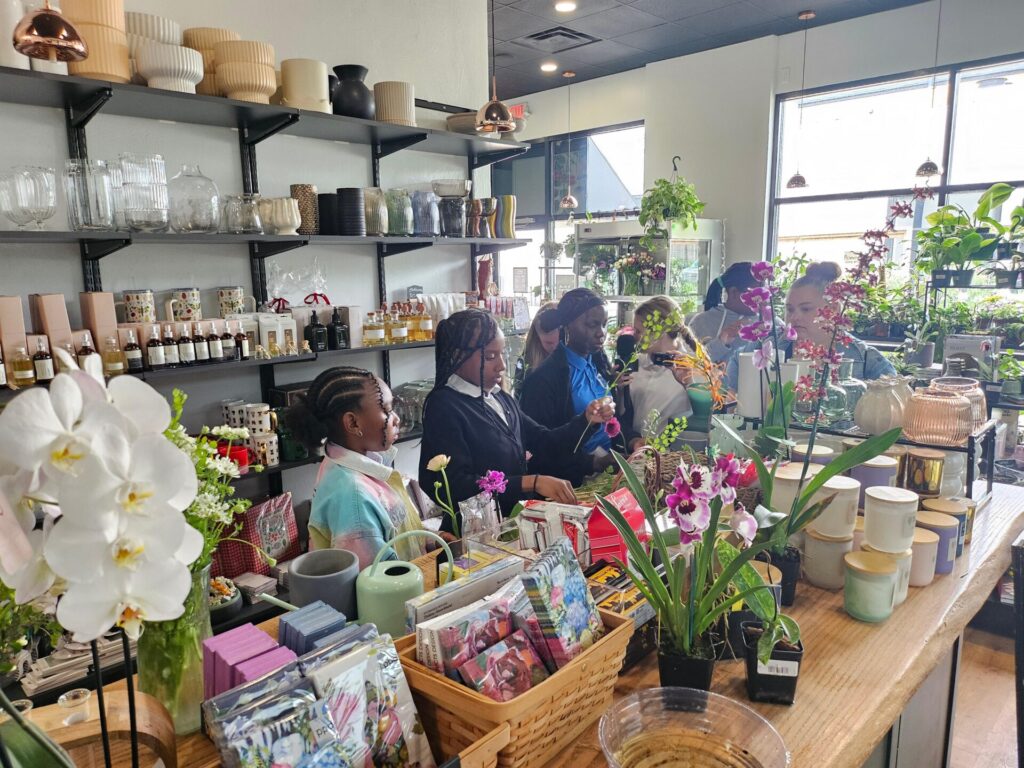
Another key aspect of the project is bringing people together within this circular ecosystem, so they can forge new connections and learn from one another — further strengthening the community.
Involvemint has been organizing community events, like a recent gathering on May 13 at PHCSE where Tayler Clemm, founder and lead educator at the wellness organization Dawa, helped families discover the health benefits of herbs and other plants.
Clemm shared books about healthy nutrition and using plants for wellness, which attendees could look through. She also invited kids and grownups to taste several teas and herbal water infusions that she brought. As they sampled different drinks, she explained about the health benefits of various herbs.
During this screen-free activity, several young kids seemed to really enjoy slowing down and taking a moment to experience the tastes and scents of these cool drinks, and also notice how their bodies felt as they hydrated with healthy beverages.
Along with the refreshments that Clemm served, attendees enjoyed a light, plant-focused dinner including hummus with chips and fresh vegetables. That meal was catered by another business in the eco-economy, which also accepts credits.
And at that May 13 event, Terroir Designs founder Matthew Zuk was on hand to teach visitors about the honeycombs he had on display. Children and their families were able to see where honey comes from and learn about it, discovering how much can be done with pure honey and beeswax.
Terroir Designs has created two bee hives at PHCSE, which are used in outdoor learning. Students often start out afraid of feeding the bees, but “it’s always a thrill for me to watch them get over those fears,” Zuk says. “They have them, immensely, until they do it. And then they’re like, ‘Oh, there’s nothing to be afraid of.’ So that’s the power of learning. It kind of takes fear away.”
Some Penn Hills students have a candle business, Zuk says, so Terroir Designs is working on helping them incorporate natural beeswax into their products.
That circular, mutually supportive process — local businesses and organizations helping learners, and everyone feeding the Zeus bio-digester and exchanging credits as they pursue their goals — is “sort of a rising tide lifts all boats” situation.
As even more organizations get involved, Little says, the goal is to make Penn Hills “a true nexus” in the eco-economy.
“Our first nexus is in Hazelwood. Another nexus is in Garfield,” Little says, where more than 10 vendors gathered on May 30 for an event called the Garfield May Mixer and Community Exchange. Those vendors were there accepting credits for their goods and services, and the individuals who were working at the event got credits for that, as well.
Creating this circular learning ecosystem and eco-economy “has been, definitely, a journey and adventure,” Little says, but it’s very much worth the effort.
“Basically, it’s another channel to access goods and services and access resources,” he says. “Not only are we growing regenerative wealth and regenerative assets, but we are curating local resilience.”
Meet the Storyteller
Melissa Rayworth
Melissa Rayworth is a writer for regional and global news outlets, and a communications consultant who works with people, foundations and companies to tease out and tell their stories across media.